


👉 Available on Spotify, Apple Podcast, Deezer, and more.
A product born in the Charente vineyards
In Charente, Pineau has long been part of the scenery. An open bottle in the refrigerator, a glass poured alongside a few oysters, some melon, or a piece of cheese when friends stop by. More than just an aperitif, it's a household ritual.
And contrary to the famous tale of the "accidentally forgotten barrel," Pineau was not born from a mistake in a cellar. It comes from an age-old and perfectly logical practice: fortification, or mutage. Long before fermentation was scientifically understood, winegrowers had figured out that adding spirit to grape must preserved its freshness and natural sugars.
The method has existed elsewhere in Europe for centuries, giving rise to Port, Madeira, and Sherry. In the Charente, it developed naturally alongside the rise of Cognac. As early as the 16th century, Dutch merchants encouraged winemakers to distill their wines to make them easier to ship. Eau-de-vie became a fixture of the local landscape, and Pineau gradually worked its way into everyday life.
At Ferrand, Pineau never lost its place
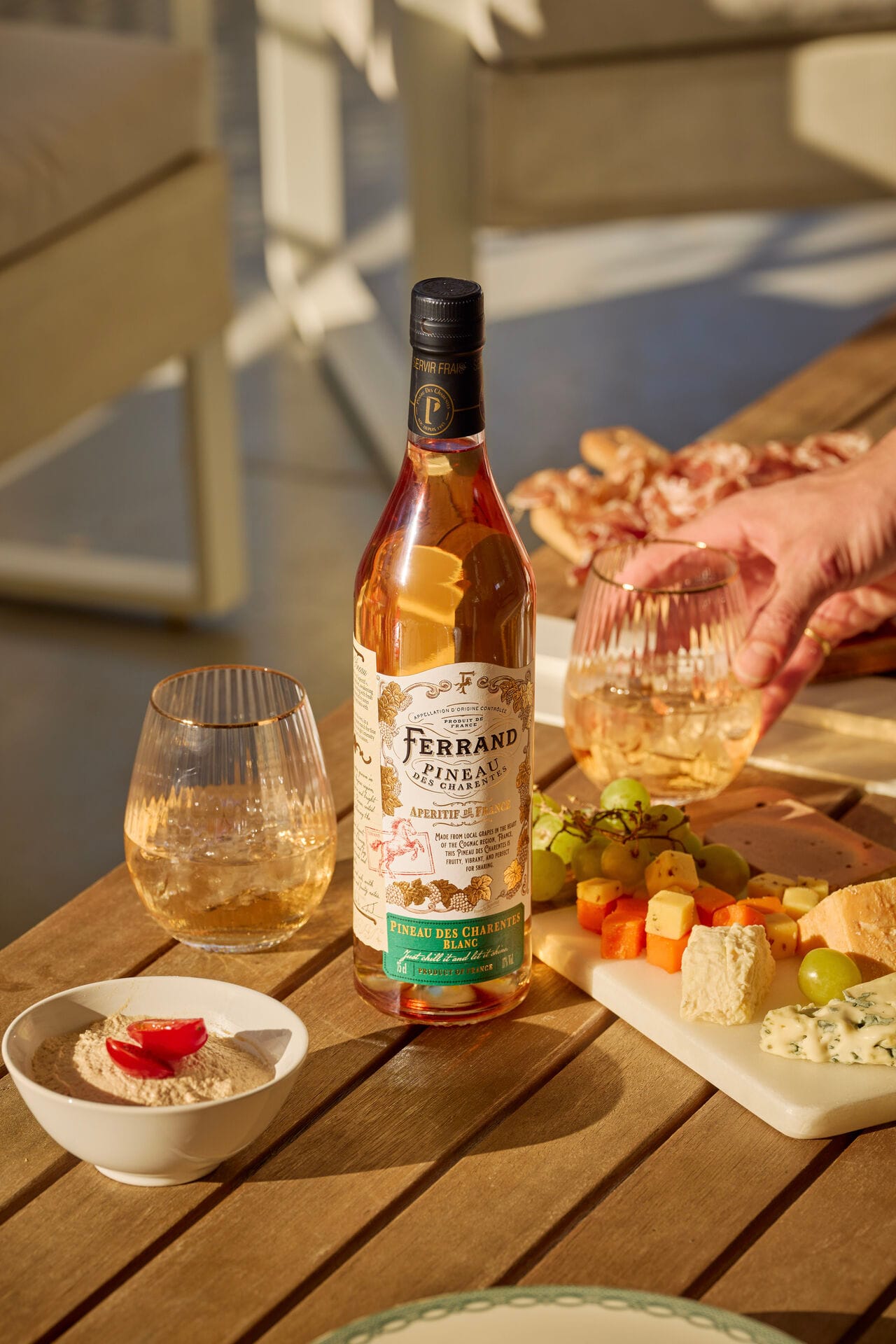
At Maison Ferrand, Pineau has always been around. Alexandre Gabriel describes it as a product deeply tied to life in the Charente and to the house's identity.
The Ferrand Pineau des Charentes Blanc is made primarily from Ugni Blanc, rounded out with Colombard. The freshly pressed must is blended with Cognac, then aged for at least 18 months in oak barrels, as required by the AOC. Slowly, the wine gains roundness while holding on to its tension.
The nose offers notes of honey, vine flower, fresh peach, and quince paste. On the palate, the balance stays remarkably precise: real sweetness, but carried by bright acidity that keeps things fresh all the way to the finish.
The Charente aperitif gets a second wind
For a long time, Pineau suffered from a somewhat dated image. Yet its profile fits surprisingly well with today's tastes: lower in alcohol, fresher, and easier to share.
The new Ferrand Pineau packaging supports this shift with a design that is deliberately simple and easy to read. The idea isn't to reinvent Pineau, but to look at it with fresh eyes and remind people that it belongs on a beautifully set table just as much as on a bar counter.
Pineau steps behind the bar
This is probably where Pineau's revival is most visible. More and more bartenders are using it to build lighter, crisper cocktails with less alcohol and plenty of aromatics.
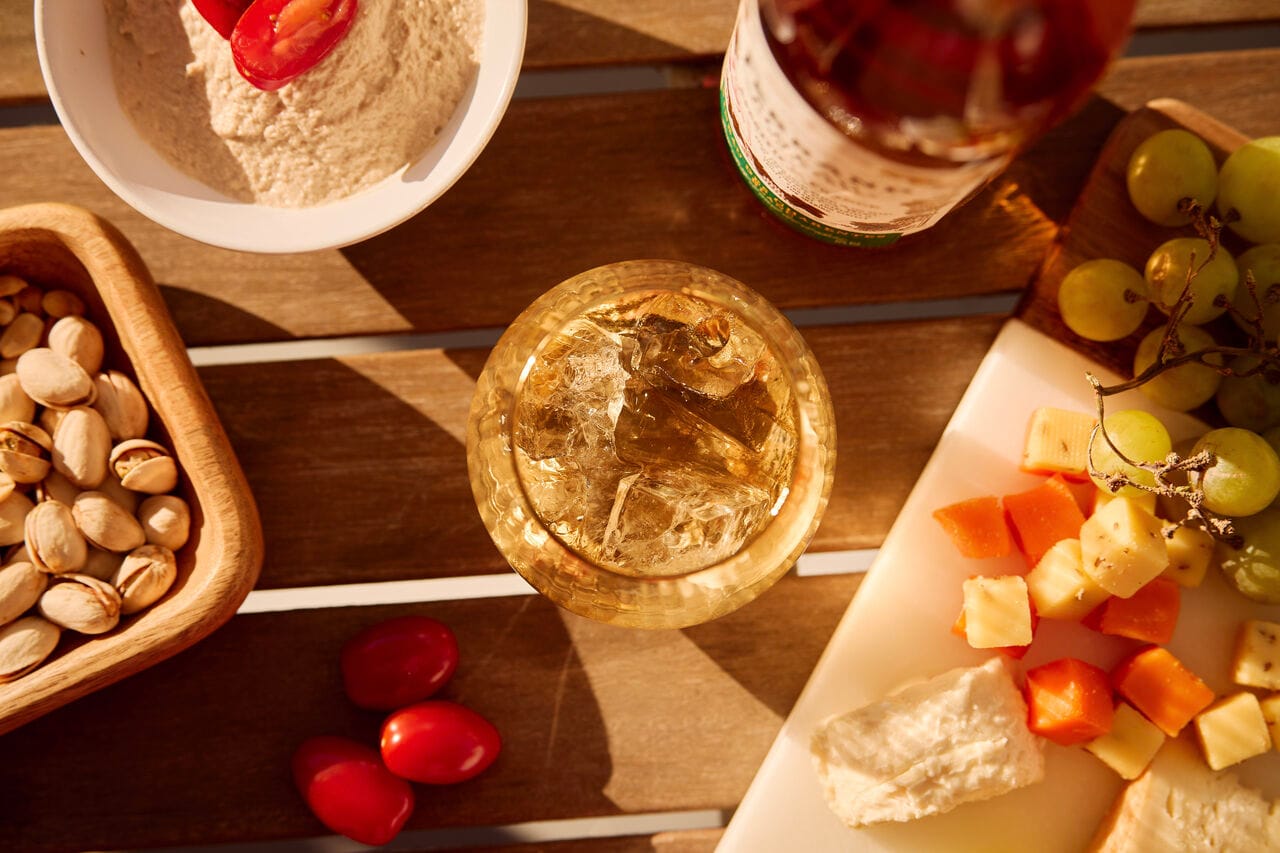
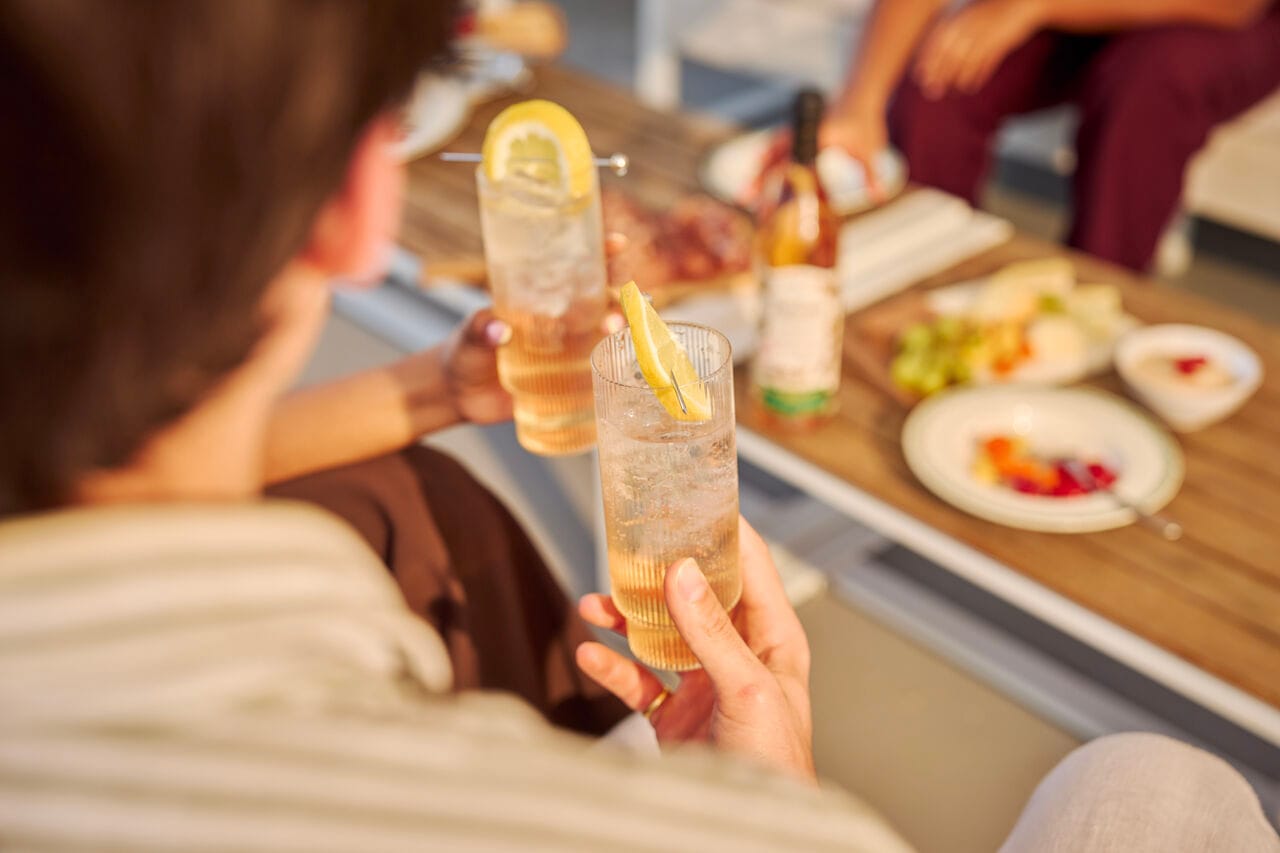
Served simply over ice, it already shows plenty of sparkle. In a Pineau Fizz, with lemon and sparkling water, it becomes remarkably thirst-quenching. In a Pineau Mule, ginger beer amplifies its spiced, honeyed notes. Even in a Sour, paired with Ferrand Dry Curaçao, it keeps that supple, fruity texture that works right away.
That is also what has won over bartenders outside France, like Ilya Demenkov, Head of Beverage and Bar Experience at The Lost Estate in London. For their production Le Chat Noir, an immersive journey into 1890s Paris blending cabaret, fine dining, live music, and French drinking culture, Pineau from Ferrand Cognac was a natural fit.
"With Le Chat Noir, we invite our guests to travel back to 1890s Paris, into a world of cabaret, bohemian pleasures, period gastronomy, live music, and French culture. Among the many bottles Maison Ferrand offers, I naturally gravitated toward the Pineau des Charentes from Ferrand Cognac, a gem still far too little known to the English public."
"Pineau plays an important role in our menu. It appears first as an aperitif, with a freshness and pleasant acidity that are ideal for starting the evening. It also goes into our cocktail Le Poison Rose, with gin, raspberry, absinthe, lemon, and a rose mist. And at the end of the meal, served well chilled, it holds its own: forget the port!" - Ilya Demenkov, Head of Beverage and Bar Experience, The Lost Estate, London
This contemporary take captures what Pineau makes possible today: reconnecting with a French tradition while bringing it into current habits that are lighter, fresher, and more approachable.
A tradition that looks to the future
Pineau never really disappeared from the Charente. What's changing today is how people see it. It's being rediscovered for what it has been from the start: a product of the vine, of simplicity, and of good company.
At Maison Ferrand, this story simply keeps being passed along, bottle after bottle. And because Pineau is also shared by serving it differently, here's a simple recipe to rediscover it in cocktail form: the Pineau Fizz.
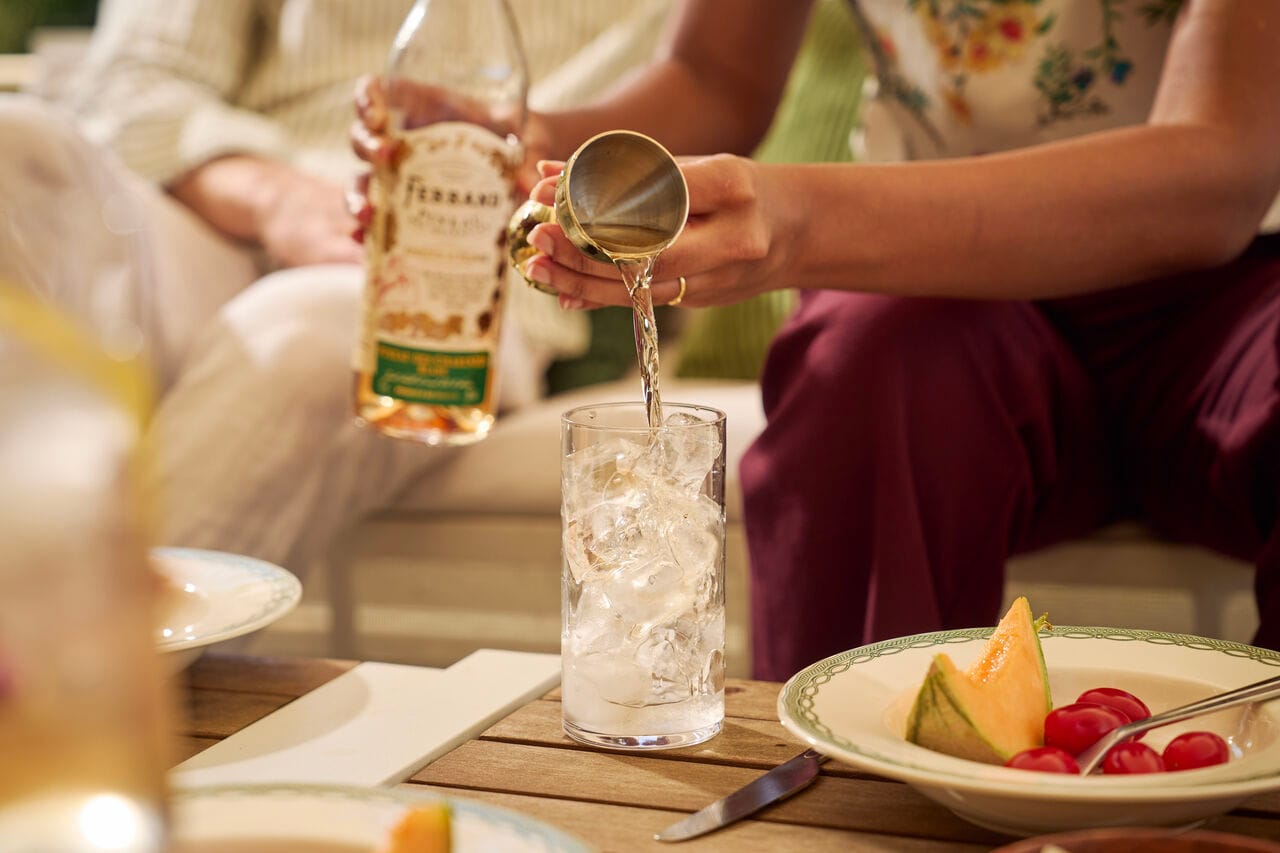
Pineau Fizz
Ingredients:
- Ferrand Pineau des Charentes: 2 oz
- Freshly squeezed lime juice: 1 oz
- Simple syrup: 0.5 oz
- Ginger beer: to top
- Angostura Bitters: 2 dashes
Method:
- In a glass filled with ice, add the Ferrand Pineau, lime juice, and simple syrup
- Top with ginger beer
- Add two dashes of Angostura Bitters
- Stir gently
- Garnish with a lime wheel
Your cocktail is ready. Cheers!


Member discussion