


👉 Listen to the first episode on Spotify
Where copper holds the memory of the hand
It all starts with a steady, muffled sound: the hammer striking copper. A time-honored gesture, still present today in the making of stills at Ferrand.
Every still is shaped by hand, as it was generations ago, through precise work that brings together material and craftsmanship. The copper stretches, it marks, not as a flaw but as the trace of skilled labour. These textures catch the light and bear witness to the touch of the human hand.
That’s the logic Ferrand chose to carry over into the glass. This relief isn’t just a visual nod; it pays tribute to a 19th-century technique: the hand-hammering of copper stills. At Ferrand, the memory of copper isn’t simply inherited; it’s kept alive every day through expertise preserved in-house by Gaylord, our coppersmith, and his team, who restore our stills themselves.
This close bond with the tool also explains why stills hold such a special place at Bonbonnet. Alexandre Gabriel has been collecting them for years, and the ones you catch sight of around the estate are only a small part of a much larger collection, several pieces of which have already been brought back to life in our workshops.
A bottle that echoes the still
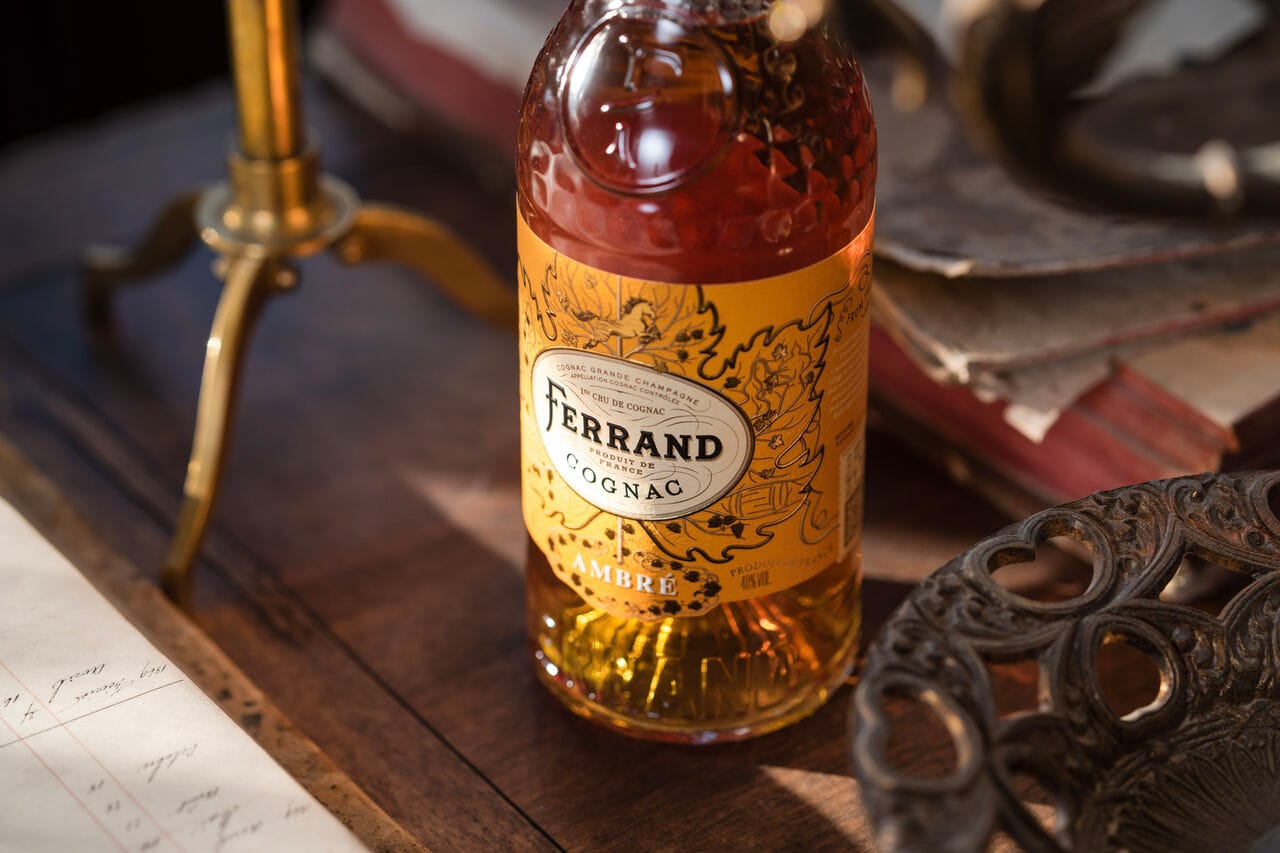
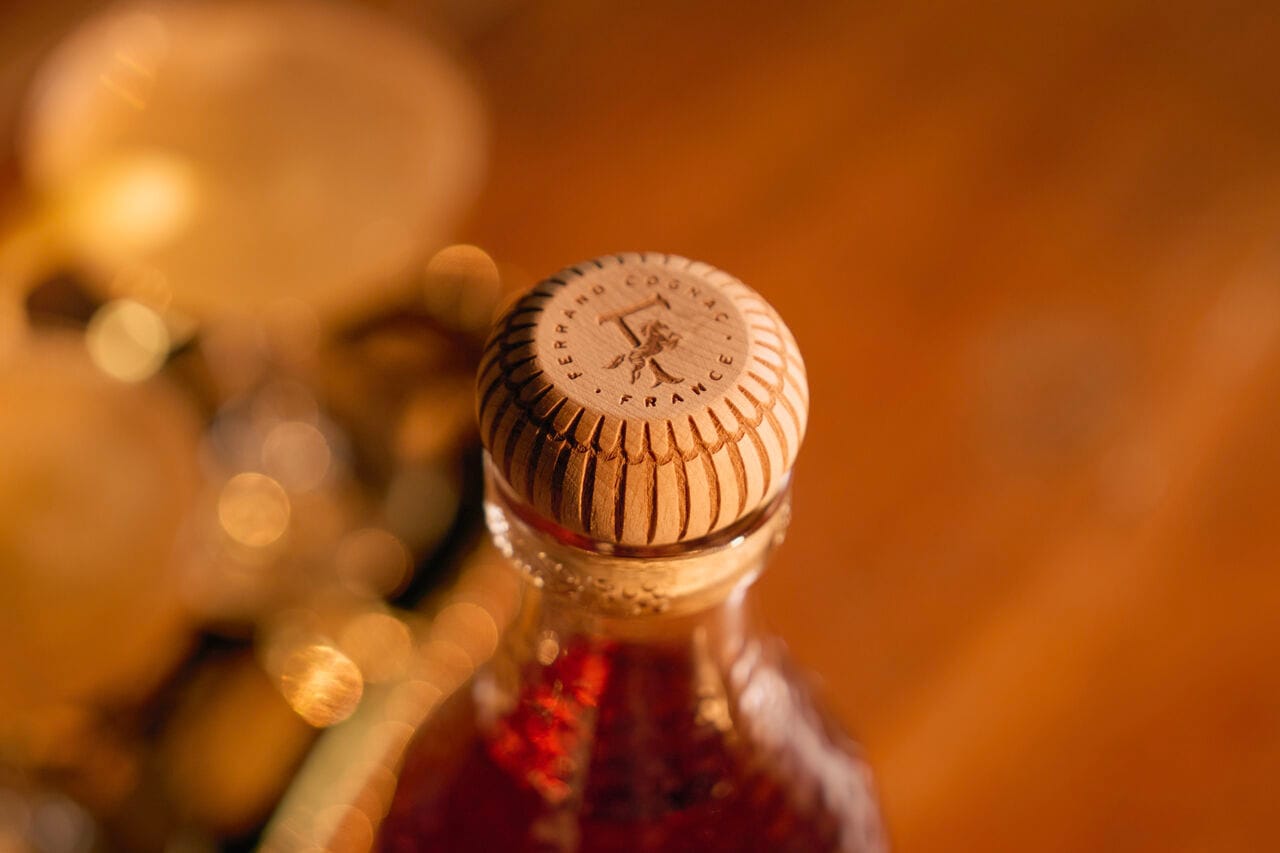
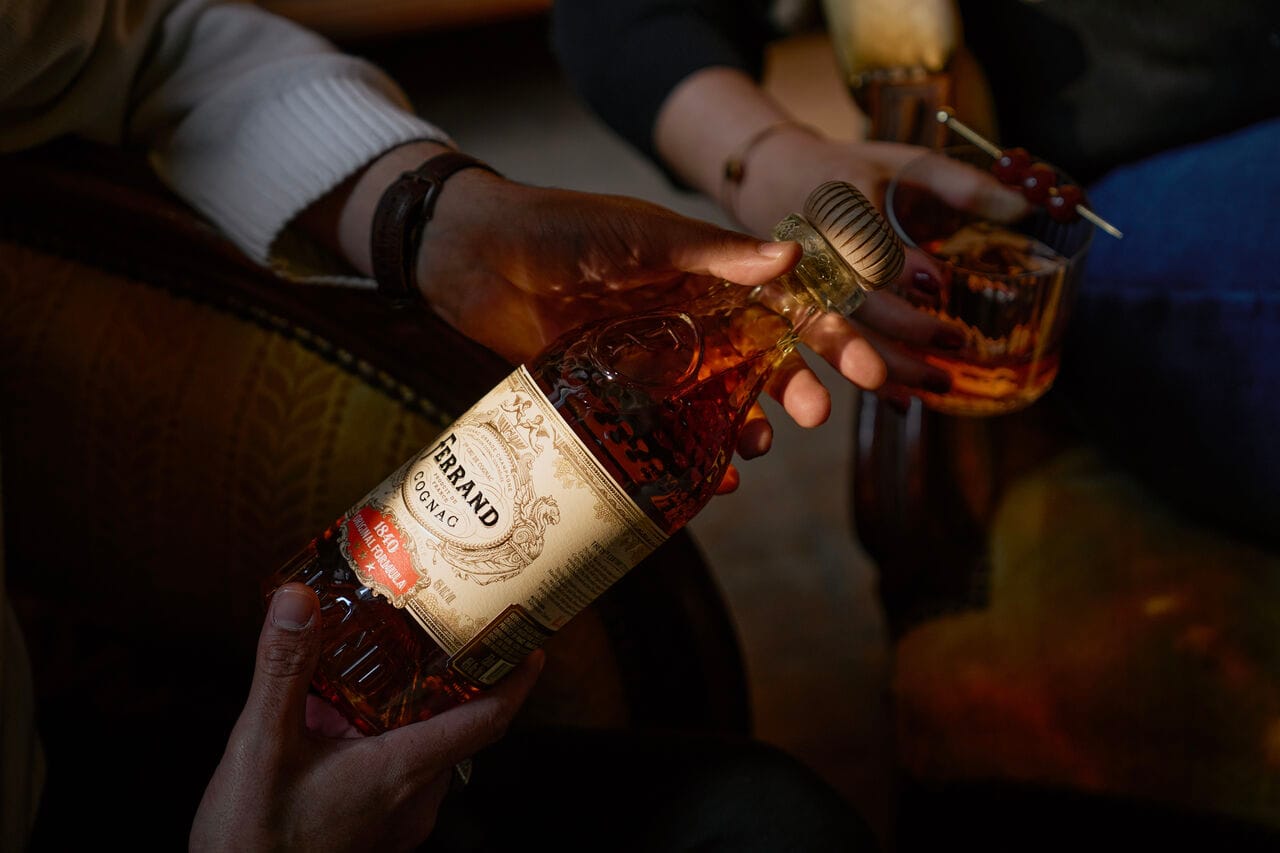
On the shoulders and neck of the new bottles, especially the Ambré and 1840 cuvées, the relief visually extends the world of the stills. The glass catches the light with subtlety and asserts a distinctive identity. This play of texture gives the bottle a quiet presence that’s immediately recognizable. The cap carries this approach further. Inspired by oak, it evokes a material at the heart of Ferrand: the cask, essential to the ageing of cognac and to shaping its aromatic identity. This connection with wood goes well beyond maturation. It also shows through craftsmanship kept in-house, particularly in the restoration of casks and the reshaping of staves, as well as through close collaboration with local coopers. The cap becomes more than a design detail: it echoes a living material that’s part of the daily life of the House.
Here, the packaging doesn’t try too hard. It fits into a larger continuity.
Ten generations, one single line
At the Manoir de Mademoiselle, history isn’t confined to the archives. It can be read in the place itself, in the objects, in everything that has been preserved.
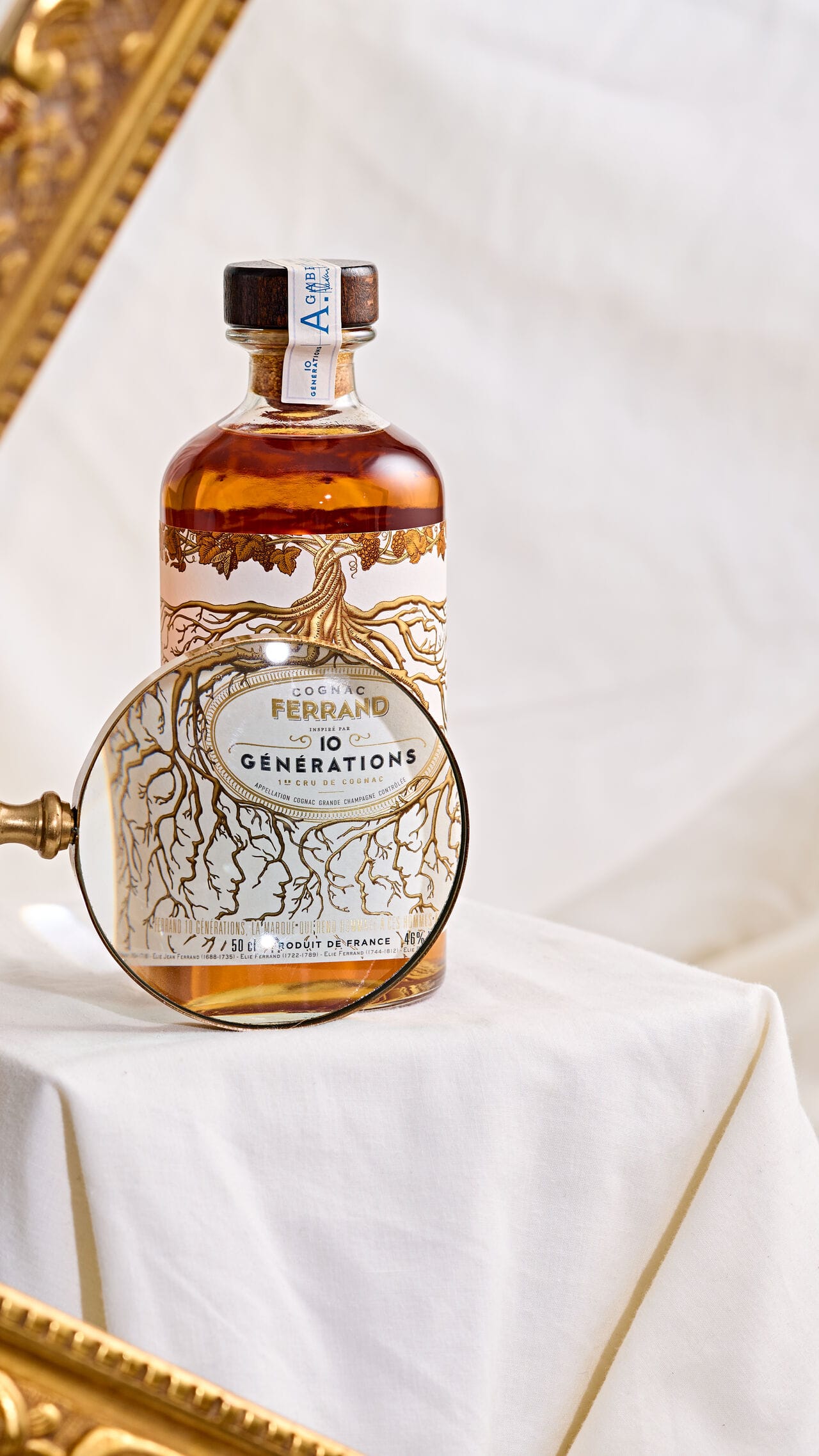
The 10 Generations cuvée makes this clear. A vine takes shape, carried by roots that turn into faces: those of Elie Ferrand and his lineage.
The roots become lines. The lines become faces. The faces become memory.
More than a family-tree symbol, it’s a way of reminding us that cognac is part of a continuous transmission between heritage and evolution. A detail you can discover almost like a game: can you find the 10 faces hidden in the packaging?
Living objects, hidden details
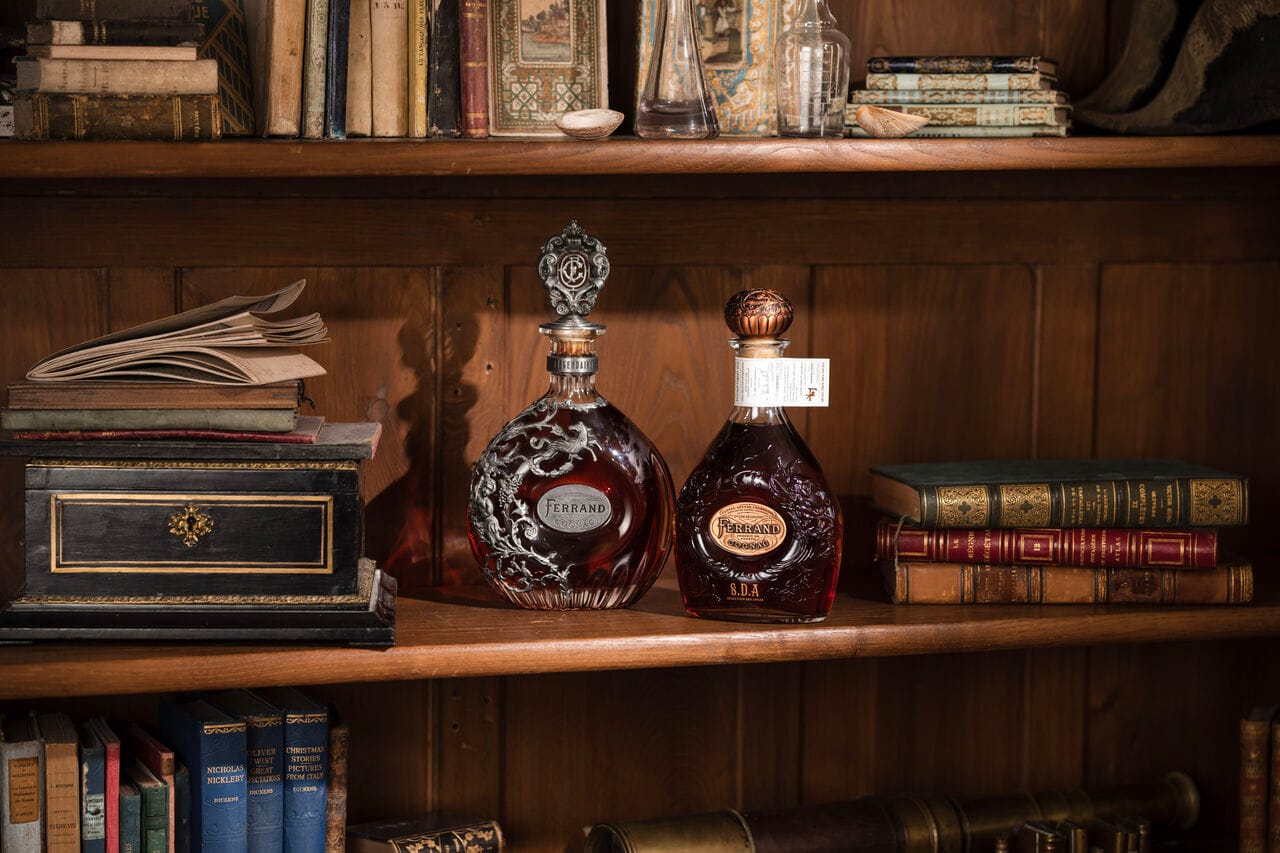
Some elements of the packaging trace back to real objects from the Manoir. The stopper of the Sélection des Anges, for example, draws on the head of Elie Ferrand’s cane. Scanned and then reworked, it creates a tangible link between past and present.
The name itself, “Sélection des Anges”, refers to what time leaves behind in the cellar: what remains after evaporation. Every motif, vine, wood, and angels, belongs to this same thread. Nothing is added without reason.
Even the horse in the logo comes from the estate’s own history, where riding competitions organized by Mademoiselle, herself an accomplished rider, and horse breeding were part of daily life.
Feeling the material
Picking up a Ferrand bottle is also a tactile experience. The glass grips the palm slightly, the textures can be felt, and the cap offers a natural hold.
These details may seem subtle, but they all contribute to the whole. They remind us that behind every choice there’s a gesture, an intention, and a will to stay true to a craft.
At heart, cognac also begins here: in the traces left by working the material, and in the choice to preserve them.
This attention to material doesn’t stop at the glass or the cap. It carries through to the labels, which are also shaped with the same sense of relief and gesture. The paper, often textured, is then transformed by various processes such as embossing, debossing, and hot foil stamping, which create depth rather than simply adding ink. Behind these effects, brass plays a central role: it’s used to make the dies that press, heat, and mark the paper.
So the label isn’t just printed, it’s physically worked, in direct continuity with the other elements of the packaging.
At Ferrand, nothing is left to chance: the packaging itself becomes a carrier of history. And this conversation between material, craftsmanship, and identity will continue soon in an upcoming article, this time around the world of Citadelle, the first craft gin in the world and the first French gin, created in 1996.


Member discussion