


The birth of an idea: bringing back a great craft gin
Back in 1991, while pursuing his advanced training in distillation in Cognac, Alexandre Gabriel began to take hold of an idea: to bring back a great gin, made the artisanal way, rooted in the craftsmanship of southwestern France, real expertise, and a deep understanding of the spirit itself.
For Alexandre Gabriel, this instinct came from both his background and his surroundings. Having grown up in a culture of vineyards and great spirits, he was naturally attuned to the importance of raw ingredients, terroir, time, and precision. Arriving in the Cognac region, he also discovered that a few limestone hills still shelter centuries-old junipers, quiet witnesses of a long-forgotten tradition that would go on to shape his inspiration. It wasn't a widespread presence, but rare, almost faded traces, a reminder of the deep bond between this plant, this land, and the region's history.
At a time when gin was rarely treated with the same seriousness as fine wines or great spirits, Alexandre Gabriel saw an opportunity: to give gin back its depth, its nobility, and a true commitment to craft.
"Citadelle wasn't born from a passing trend. From the very beginning, my goal was simple: to give gin back the depth, the nobility, and the craft standards it had often lost through industrialization. I wanted to return to real ingredients, with true juniper berries and freshly harvested spices, to method, to history, in order to recreate a gin with character, intense yet incredibly refreshing, with great finesse, never harsh, and capable of standing alongside the finest spirits and the greatest wines through its complexity." - Alexandre Gabriel, master distiller and founder of Citadelle Gin
The years of learning to uncover the secrets of gin
For Alexandre Gabriel, the act of creation begins with research. And in the case of gin, that research was long, patient, and deep, sometimes stretching over several years.
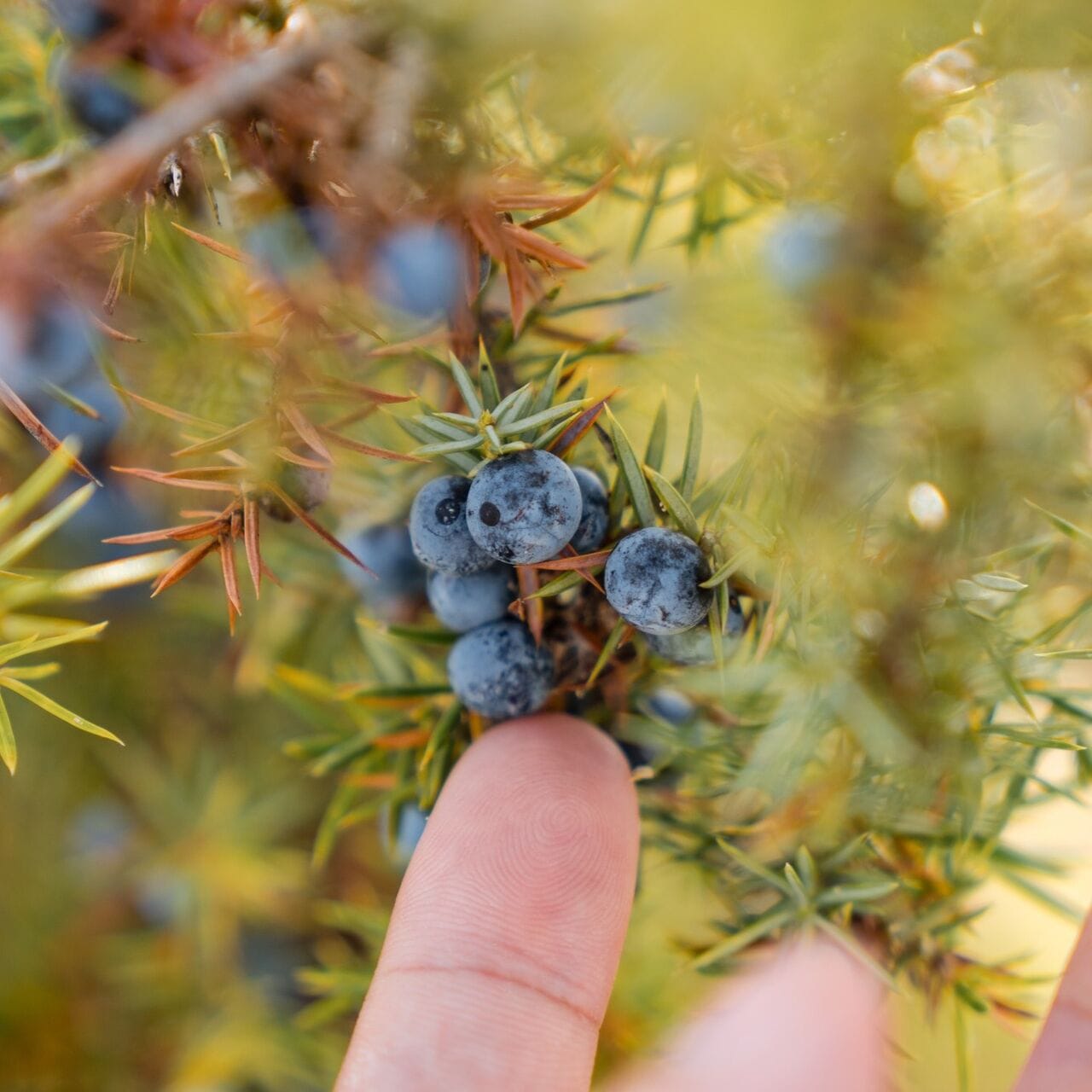
He needed to understand the origins of this spirit, its DNA, the way it had taken shape, and how it had become this fascinating combination of juniper berries, the true backbone of gin, citrus notes, the second essential pillar of Citadelle's identity, and the distinctive spices that bring sophistication, finesse, and complexity.
What followed were visits to dozens of gin distilleries, along with the study of old manuscripts and documents. With limited resources at the time, Alexandre Gabriel and the small team at Maison Ferrand spent long hours in the city archives of northern France and Flanders, the true 18th-century birthplace of genever, the direct ancestor of gin.
This path of discovery also led to a key realization: unlike cognac, which is governed by dozens of pages of regulations covering its production and identity, gin has only a single paragraph of definition at the European level. That freedom may have explained some of the excesses or shortcuts seen at the time. But it also represented a remarkable blank page for anyone who wanted to approach gin with the rigour of a master distiller.
In search of the ideal method
While visiting distilleries and working with other distillers, several methods emerged. The most classic and the most common involved placing the juniper berries and spices together in the still, in the base alcohol, the night before distillation, and then distilling the next morning.
However, the method of sequential distillation seemed to hold the most promise. It involves distilling the various botanicals and spices separately from one another, and then blending them together afterwards, much like creating a perfume. For a master blender like Alexandre Gabriel, this felt intuitive and certainly worth exploring, since it allowed him to pursue a central idea: offering an infusion perfectly suited to each botanical.
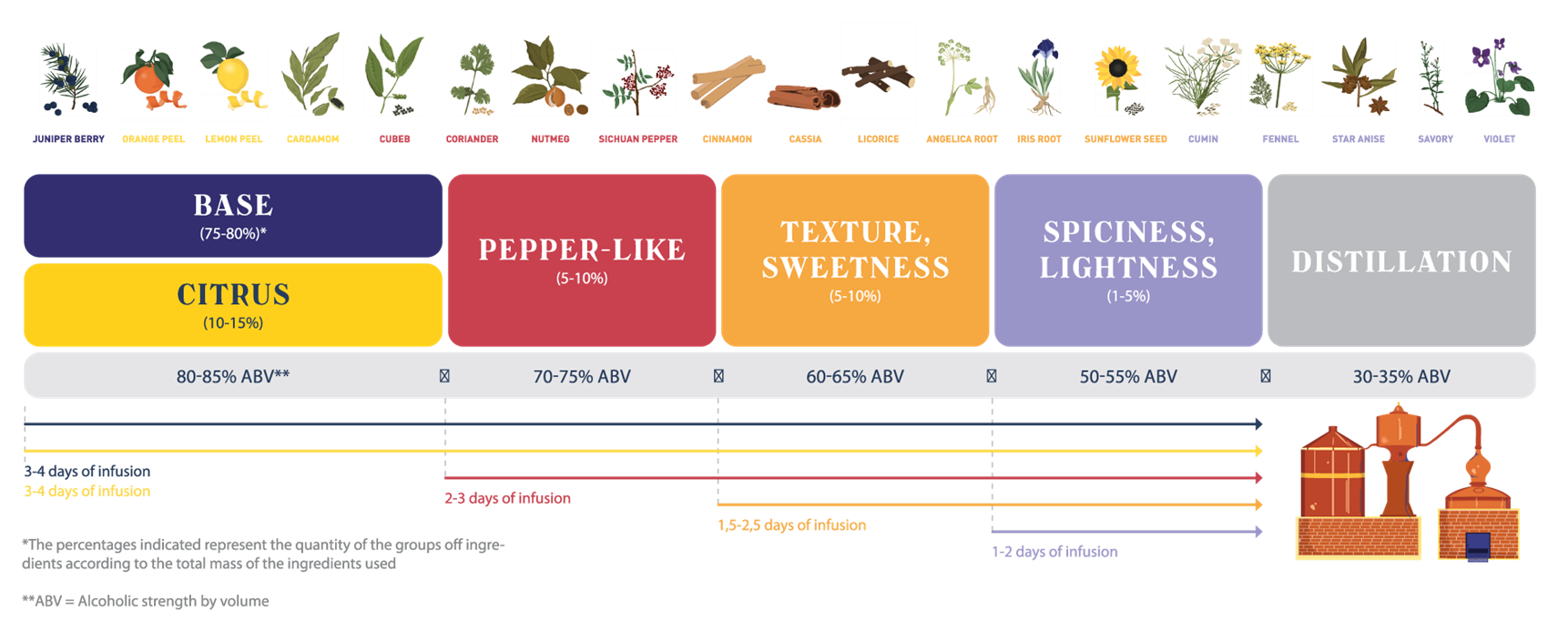
The alcohol strength and the duration of a maceration deeply influence what you extract from a botanical or a spice. Some elements are more soluble in water, others in alcohol. If you want to extract specific aromatic profiles, you have to play with the alcohol level. It's exactly like working with spirits and wood: depending on the strength at which you put a spirit into a barrel, you'll bring out more sweetness and vanilla notes, or instead the tannins. This logic is fundamental.
The idea of separating the macerations, and then the distillations, seemed ideal for honoring each spice and each botanical, and drawing out the best of everyone. Yet the results of the many trials were extremely disappointing. The aromatic complexity was certainly there, and the extraction was very refined, but what was missing was what distillers call the melding. The various aromatic and flavor compounds weren't married together the way they should be in a great spirit. They weren't integrated, blended, or harmonized. So how could one benefit from the precision of working with botanicals separately, while still achieving that natural integration and marriage of flavors?
It was from this very question that progressive infusion was born, a technique so unique that it has been patented. A story to discover in our next article!


Member discussion