


Harvest fast, press right, and master the fermentation
Always on the lookout for the key elements, both technical and cultural, that shape the taste and aromas of cognac, Maison Ferrand carries forward the methods it holds dear. Every decision reflects true craftsmanship, where nothing is left to chance.
This pursuit of excellence is an ongoing endeavor. It comes through just as clearly in the cellars and the vineyards as it does in deep archival research within the Maison, bringing rare and fascinating historical formulations back to life.
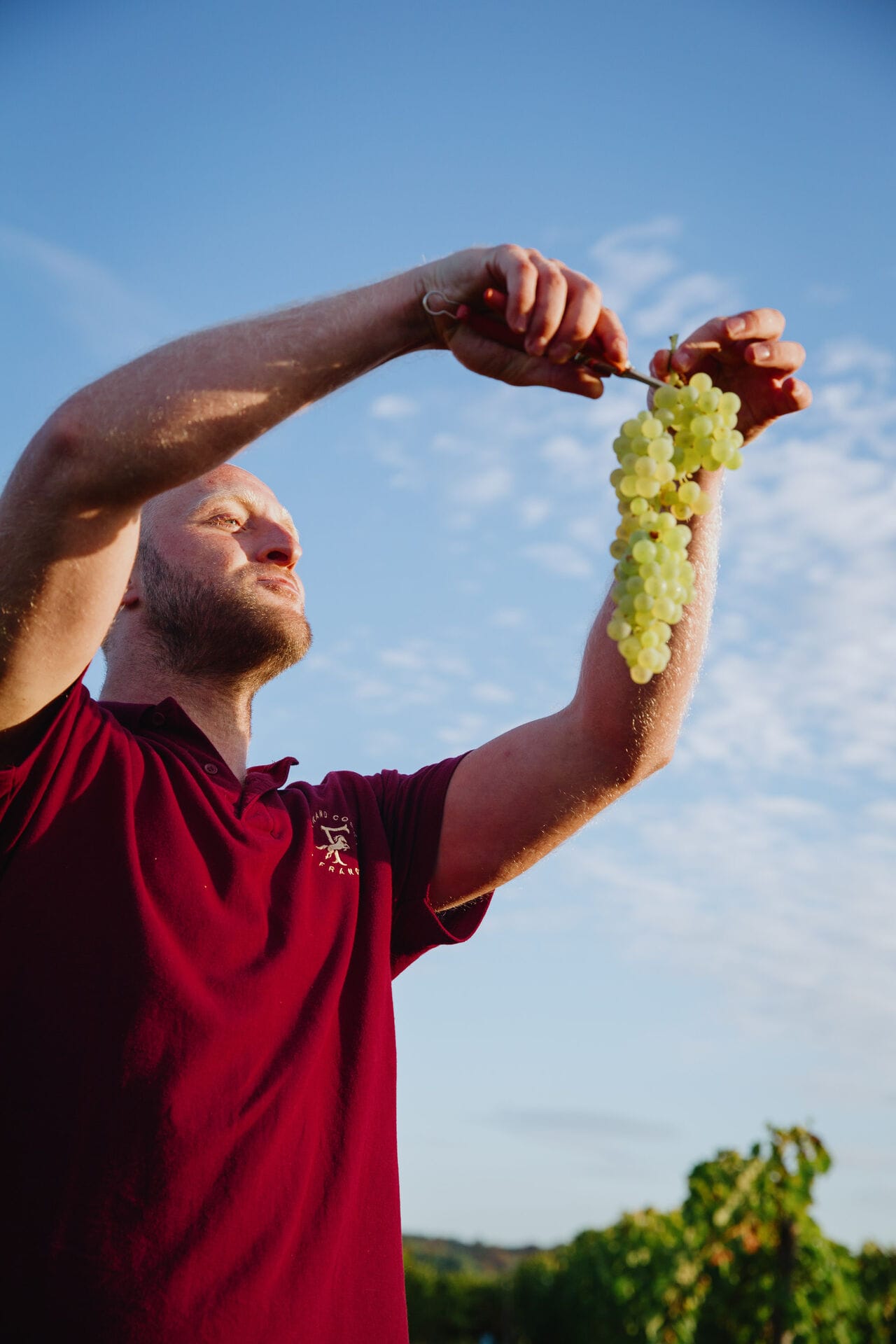
For several years now, a major area of research has focused on indigenous yeasts specific to each plot. Carefully studied and selected, these yeasts play a decisive role in the most refined aromatic expression of cognac. This in-depth research has recently yielded distillates of remarkable intensity and aromatic complexity, the result of extensive groundwork – literally!
These exacting standards run through every stage of production: soil management, the vine, the grape cluster, the wine, the very foundation of cognac, all the way through distillation and aging. Following the same philosophy, Maison Ferrand made the decision decades ago to replant heritage cognac grape varieties such as Colombard and Folle Blanche. Though they now represent only a small fraction of the appellation as a whole, at Ferrand they hold a central place, accounting for nearly a quarter of the estate’s most structurally important plots.
It’s a demanding path, fully embraced by our team, that produces cognacs with a bold identity and a truly unique signature.
The art of distillation, constantly refined
One of our golden rules is to always distill our Grande Champagne and Borderies wines before Christmas. It’s a demanding choice, and a costly one, but essential for working with wines of extreme freshness, their fruit notes still intact, and for preserving every nuance of aromatic finesse.
This calendar constraint is also critical for preventing malolactic fermentation. This process, triggered by bacteria that convert malic acid into lactic acid, can be desirable in certain still wines. At Cognac Ferrand, we deliberately choose to avoid it, even though some producers opt for it. This distinction allows us to preserve the most delicate aromas and the aromatic precision of our eaux-de-vie.
Over the years, we have continually refined our distillation method: the work is done stage by stage, down to the second, retaining the lees, which are true carriers of aroma and evolve over time, particularly toward rancio notes (a subject we’ve devoted serious research to).
“Lees don’t just release aromas when heated. They also give off what are known as aroma precursors: you can’t really detect them at the time, but with ageing, they gradually bring added complexity to the spirit. That’s what distillation is all about: moving forward step by step, at the precise moment when the seconds begin, to capture that substance without letting the heavier character of the seconds take over.” — Fannie, Head of R&D, Maison Ferrand
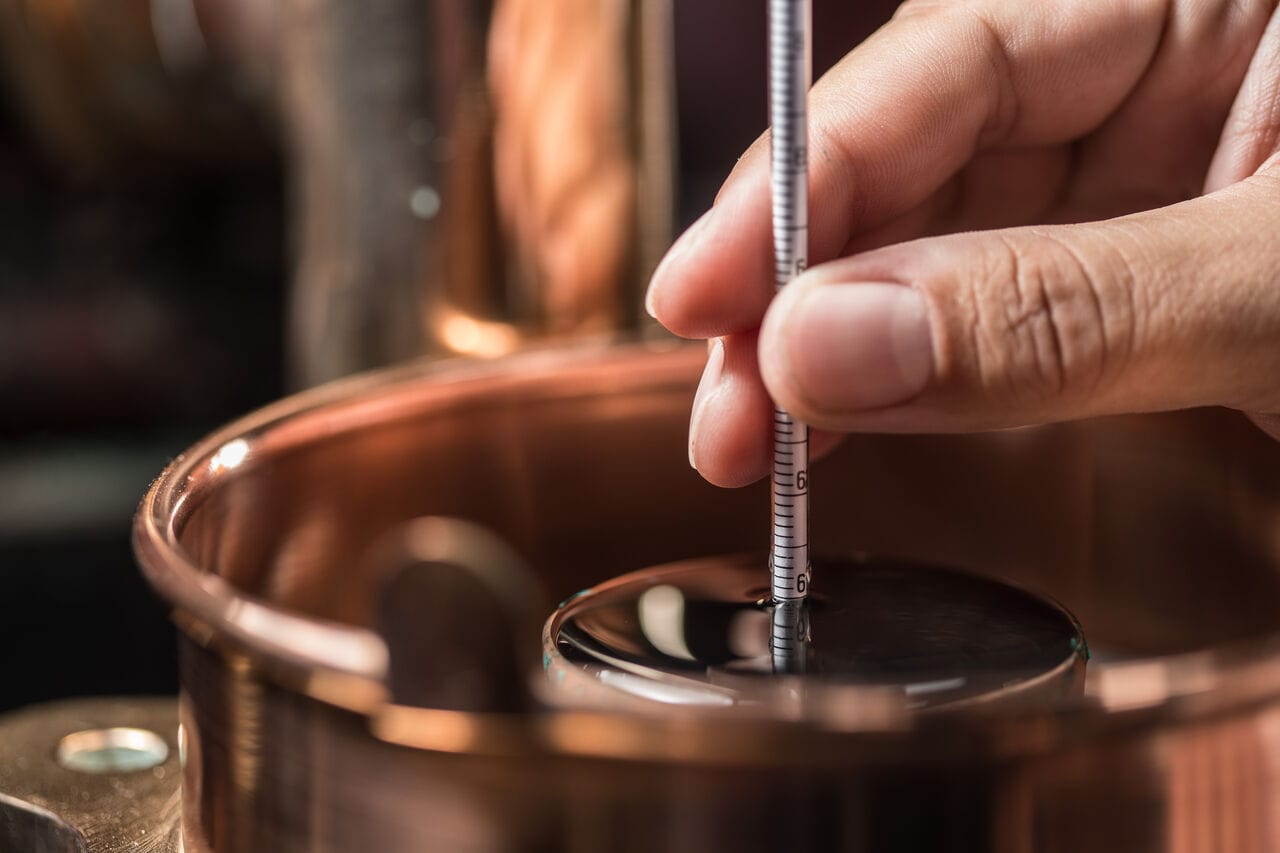
The separation between the heart, the seconds, and the tails is carried out with extreme precision. Our pursuit of the best possible seconds is an especially demanding task that requires the distiller to be present at the still at all times. This approach, more sensory and intuitive, is done primarily “by nose” and remains rarely practiced in Cognac. It relies above all on the distiller’s expertise, experience, sensitivity, and the refinement of their nose, all essential for making accurate and consistent cuts.
At Maison Ferrand, nothing is improvised. From harvest to fermentation, and through to the extreme precision of the distillation cuts, every choice is made to preserve the brilliance of the fruit, the purity of the aromas, and the character of the terroir. It is an exacting standard applied at every moment, one that transforms technical mastery into a true flavor signature.


Member discussion