


👉 Available on Spotify, Apple Podcast, Deezer, and more.
Why the name Citadelle?
Alexandre Gabriel likes to recall that the name "Citadelle" came to him with unusual clarity.
For him, Citadelle was born first from a drive to explore. A drive to look where others might not, to trace the thread of history, to understand where a spirit comes from before imagining where it could go.
Trained in Cognac, surrounded by expertise handed down over several centuries, Alexandre Gabriel found in gin an almost forgotten territory. Not industrial, standardized gin, sometimes harsh or aggressive, but a great spirit of character, slowly distilled from real botanicals in small copper stills, the way it was done long ago.
Back then, most gins had lost that original connection. That link to juniper, to plants, to raw ingredients and slow distillation seemed to have faded. And yet, in the Southwest, on the hills around Cognac, the juniper trees were still there. Those juniper berries, used long before the big spices from elsewhere arrived in bulk, carried a very old memory of their own.
Working from that hunch, Alexandre Gabriel dug into the archives. Many people instinctively link gin to the United Kingdom. But the story of gin goes back further, to genever itself, made from juniper. As he kept researching, he discovered that the ancestors of gin were born in Flanders, a territory that, in the 16th century, covered areas now split between France, Belgium, and the Netherlands.
It was in those French archives of Flanders that he found the trace of a juniper producer registered in 1776. This producer was set up in a citadel in Dunkirk. For Alexandre Gabriel, the discovery felt like a sign.
The word resonated even more because, in the Southwest, the landscape is also marked by citadels. They embody both land and sea. The land, with its juniper berries and deep, powerful, rooted botanicals. The sea, with the spices and citrus that came from elsewhere: nutmeg, cardamom, lemon zest, yuzu, and so many others.
So the name "Citadelle" perfectly captured the vision behind the product. A gin rooted in its home, yet open to the world. A spirit built on a balance between local depth and a breath of the wider world, between structure and finesse.
There was even a local newspaper called La Citadelle in Cognac and the Southwest about a hundred and twenty years ago. Once again, the word seemed to belong to that shared imagination. The name was right there, an obvious choice.
"Citadelle perfectly expressed that balance between roots and openness, between local depth and a breath of the wider world, between structure and finesse. The name meant so much to us that we chose it right away." - Alexandre Gabriel, founder and master distiller of Citadelle Gin.
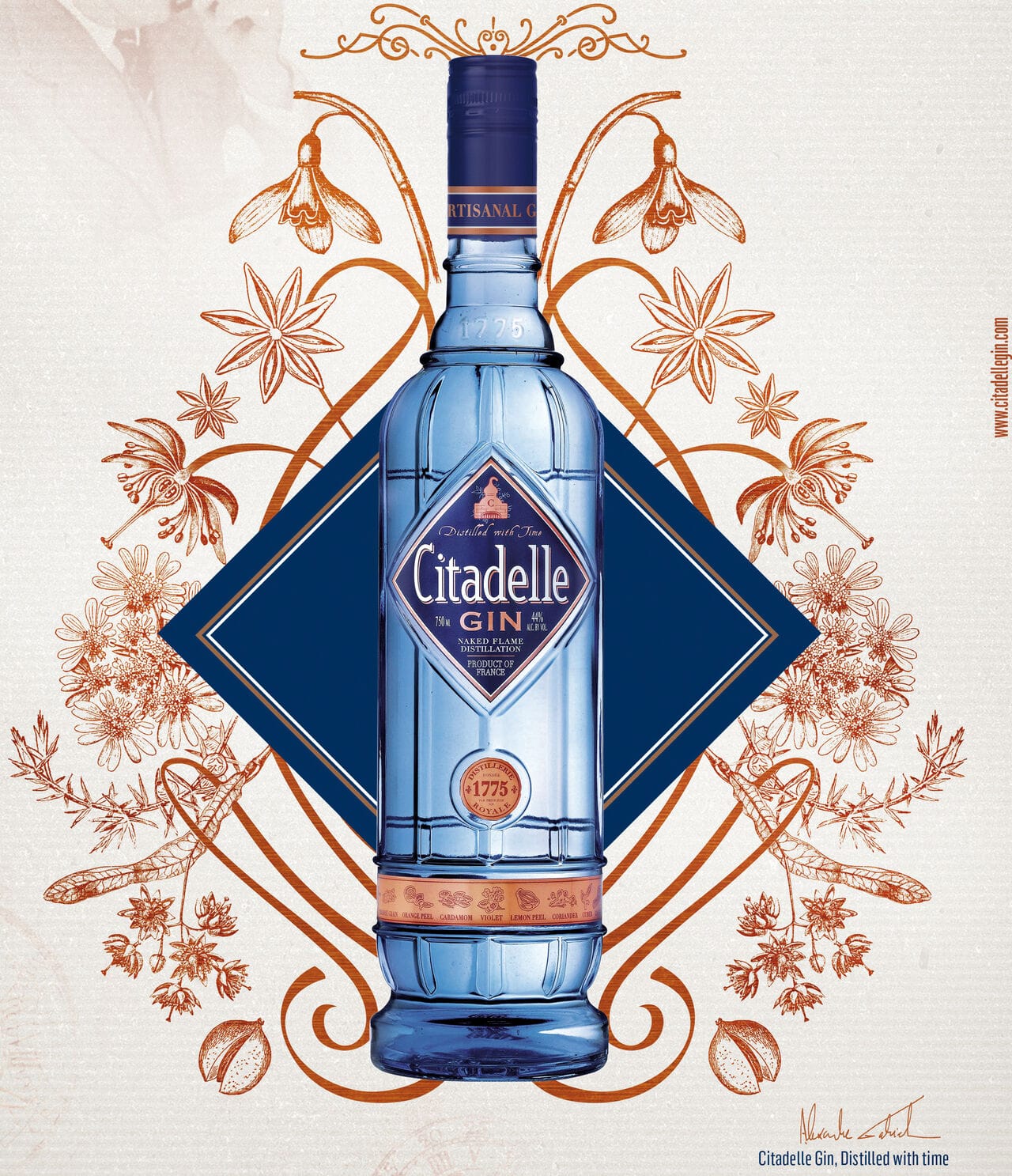
The revival of a great spirit
"Looking back, I see Citadelle as the first gin of this revival. A revival of gastronomic gin, of gin built on real ingredients and real methods. A gin that reopened the door to genuine aromatics, real notes, real natural flavors. It's not just one more gin, but a determination to give this spirit back its soul, its complexity, its nobility, and its roots." - Alexandre Gabriel.
When Citadelle was born in 1996, the craft gin category barely existed. Gin was largely seen as a mass-market spirit, often standardized, and sometimes even treated as a thing of the past. Some producers went so far as to tell Alexandre Gabriel that gin was finished.
But he sensed there was something else to be done. He saw in gin a spirit capable of carrying a strong message in a bottle. A spirit of style, character and personality. A product that could recover its soul, its complexity, and its nobility.
The tool was right there: the Charentais stills used in winter to distill Cognac. Their slow distillation, their relatively low swan neck, and their ability to draw out certain essential oils made it possible to imagine an intense, expressive, and elegant gin, without any harshness.
But the road was not simple. At first, customs officials explained that these stills could not be used to make anything other than Cognac. Yet Alexandre Gabriel could find no law that clearly forbade it. So, it took discussion, research, persuasion, and a workable path forward with the authorities. That process took nearly five years.
The wait could have stalled the project. Instead, it let him go much further. Maison Ferrand had time to run more research, more trials, more adjustments, and more experiments. The goal was clear: to find a method that could draw the best out of every ingredient. Because a great gin doesn't rest on the juniper alone. It's built on balance among all its botanicals, in their order, their intensity, their infusion, and their distillation.
This work even led to a patent for making Citadelle. A rarity in the history of gin, which has very few patents across several centuries of production.
Citadelle Gin launched in 1996 with a strong conviction: that it had created a great gin. The market, though, wasn't ready yet.
The early days were tough. The product didn't take off right away. At a time when craft gin wasn't yet a recognized category, the team had to explain, convince, offer tastings, and defend the very idea that a gin could be a spirit for sipping, for fine dining, and for pleasure.
Maison Ferrand entered Citadelle in many competitions. Little by little, the awards came in. Judges were surprised by this French gin, at once aromatic, precise, and elegant. That recognition gave the project credibility, but commercial success still had to be built.
A first turning point came from Spain in 1998. Ferran Adrià, the visionary chef of the restaurant El Bulli, one of the biggest names in the culinary world, said on television that a well-made Gin & Tonic, with the right ingredients and the right glass, could become a real culinary experience. He then used Citadelle Gin on screen.
That moment was pivotal. In Spain, Ferran Adrià was a major figure. His approach shifted the way people saw the Gin & Tonic. The drink was gradually moving out of the world of the simple long drink and into that of fine dining. The balloon glass, the choice of tonic, the quality of the gin, the garnishes, and the service all became essential parts of the experience.
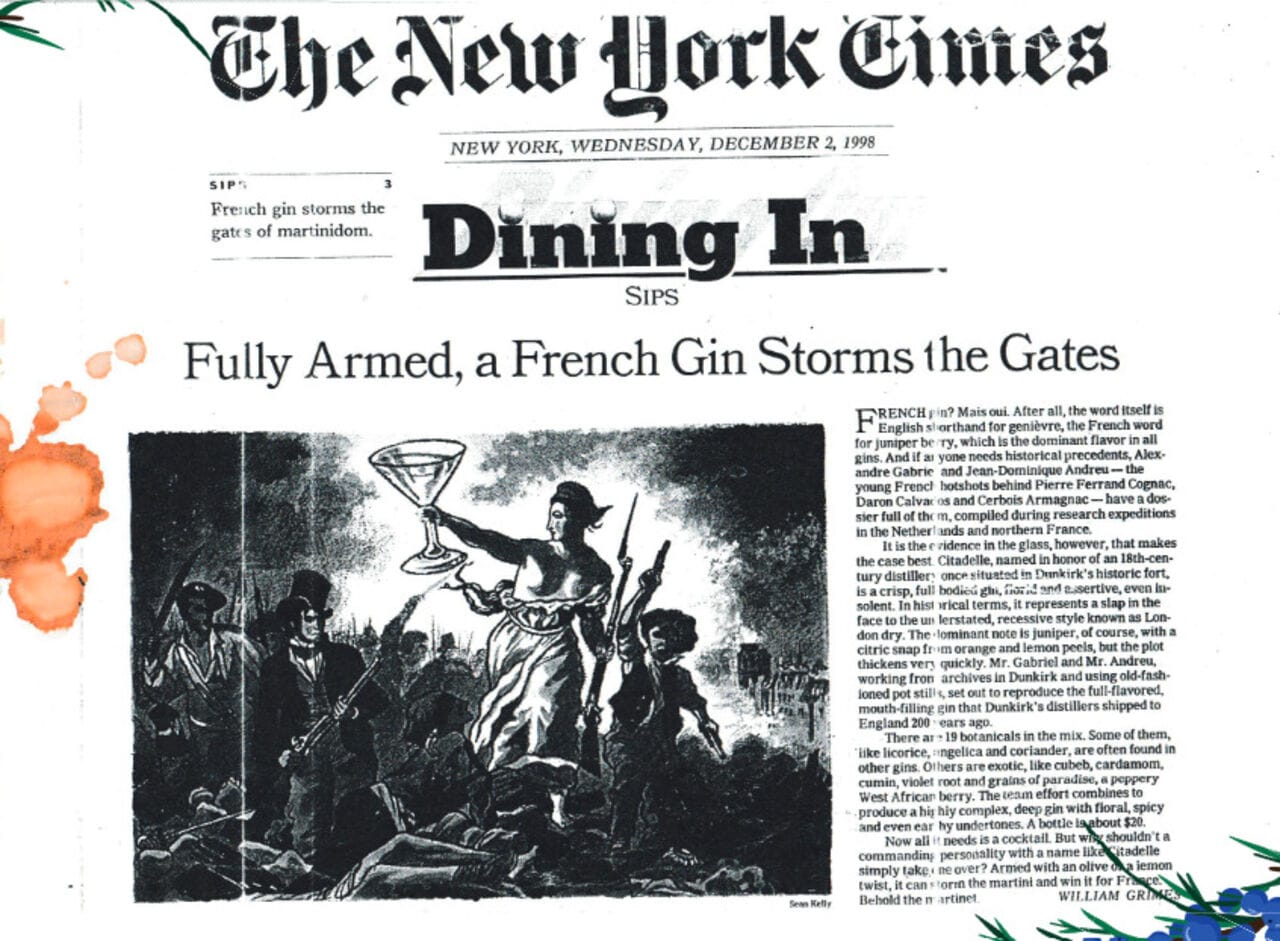
Citadelle thus found itself at the heart of a growing movement: gastronomic gin
Another turning point happened in the United States. After a tasting with a leading spirits critic from the New York Times, Citadelle became the subject of a notable article. For a still-young brand, in a category many considered outdated, that visibility was significant. It opened new doors, especially with distributors who had been on the fence.
Bit by bit, Citadelle established itself as one of the pioneers of this revival. Not because the brand had simply launched one more gin, but because it stood for a different vision of the category: a gin of real ingredients, of method, of slow distillation, and of aromatic complexity.
Between 1996 and 2015, Citadelle lived several lives. First that of a bet almost no one understood. Then that of an award-winning gin that was still under the radar. Next that of a spirit recognized by the culinary world and by major international markets. Finally, that of a brand at the heart of the worldwide gin revival.
This period was also one of visual change. At launch, Citadelle came in a first screen-printed bottle, designed to express that link between land and sea. Then came a longer bottle, almost like a seltzer bottle. Finally, the brand adopted the emblematic French bottle we know today, inspired by old bottles found at antique markets, often blue, with a pewter cap.
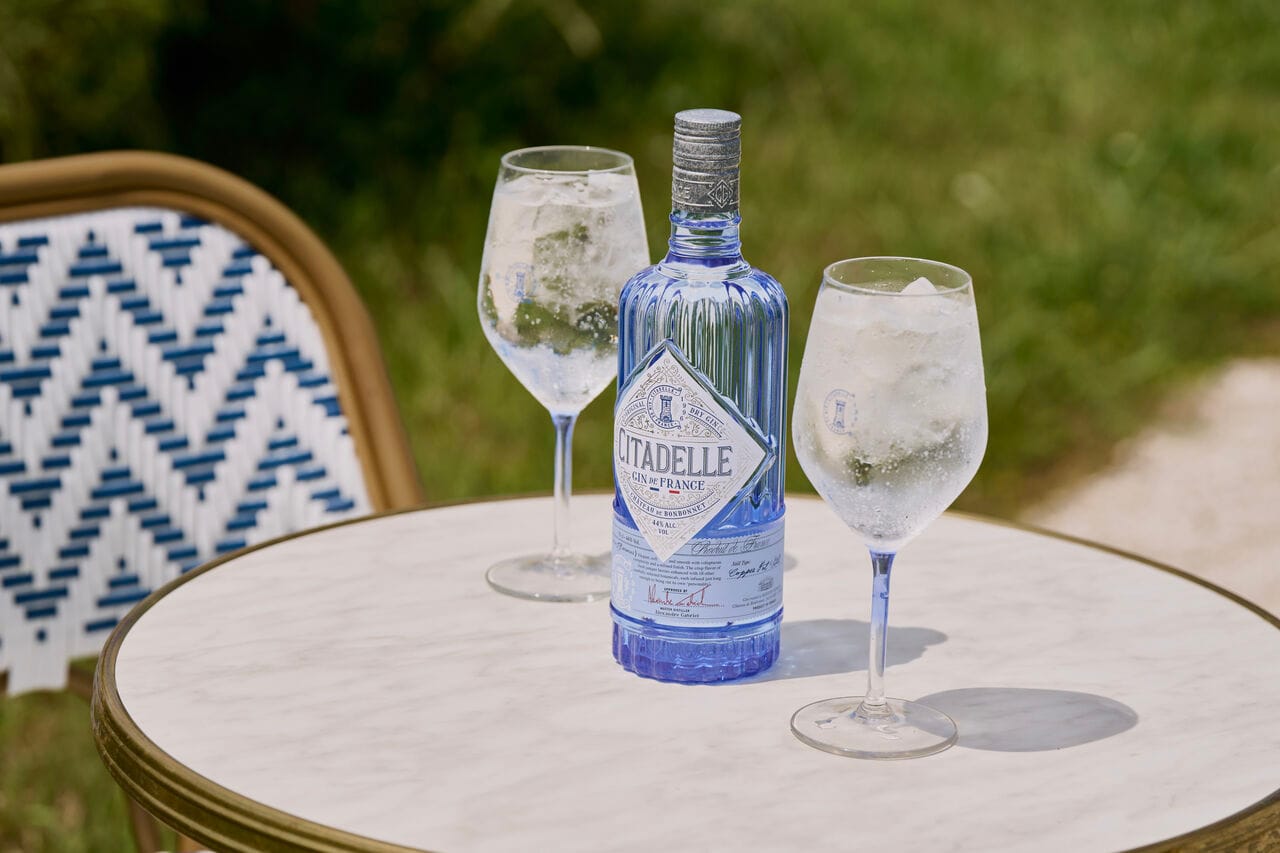
Looking back, Citadelle stands out as one of the first gins of this modern revival. A revival of gastronomic gin, of gin with real flavor, of gin conceived as a great spirit rather than a simple cocktail base.
"It wasn't necessarily some grand vision at the start. It was mostly the drive to see things through. To look elsewhere. To dig into the history of very expressive spirits full of character." - Alexandre Gabriel.
This chapter marks the culmination of a long journey that began nearly twenty years earlier. From the initial hunch to international recognition, from the archives of Flanders to the Charentais stills, from Cognac to gastronomic Spain and then to the United States, Citadelle Gin was built step by step, with patience, conviction, and rigor.
That's how Citadelle was imagined. And that's how it was born: as a dream come true, but also as an invitation to give gin back all its depth, its history, and its future.


Member discussion