


To do this uncompromising approach justice, this article is split into two parts. This first installment focuses on the vineyards, where it all begins. In an upcoming Uncut Story, we'll pick up the rest of the process, from fermentation to distillation!
In the beginning was the vine
For Ferrand Cognac, everything starts in the vineyard. Starting in winter, pruning determines the balance of the vineyard. Each vine is trained to produce two fruit-bearing shoots that will carry the grapes and shape the plant's growth for years to come. We prune using the flat double Guyot method, which limits powdery mildew (a vine disease), distributes the grape clusters along the full length of the row, and keeps the foliage from bunching up. By keeping disease in check, this practice produces healthier grapes.
"The quality of cognac is determined well before distillation. That's why we like working with both young vines and old vines. Even though the older ones produce less, they concentrate more aromas, especially our Colombard plot" - Corentin Negre, Vineyard Manager.
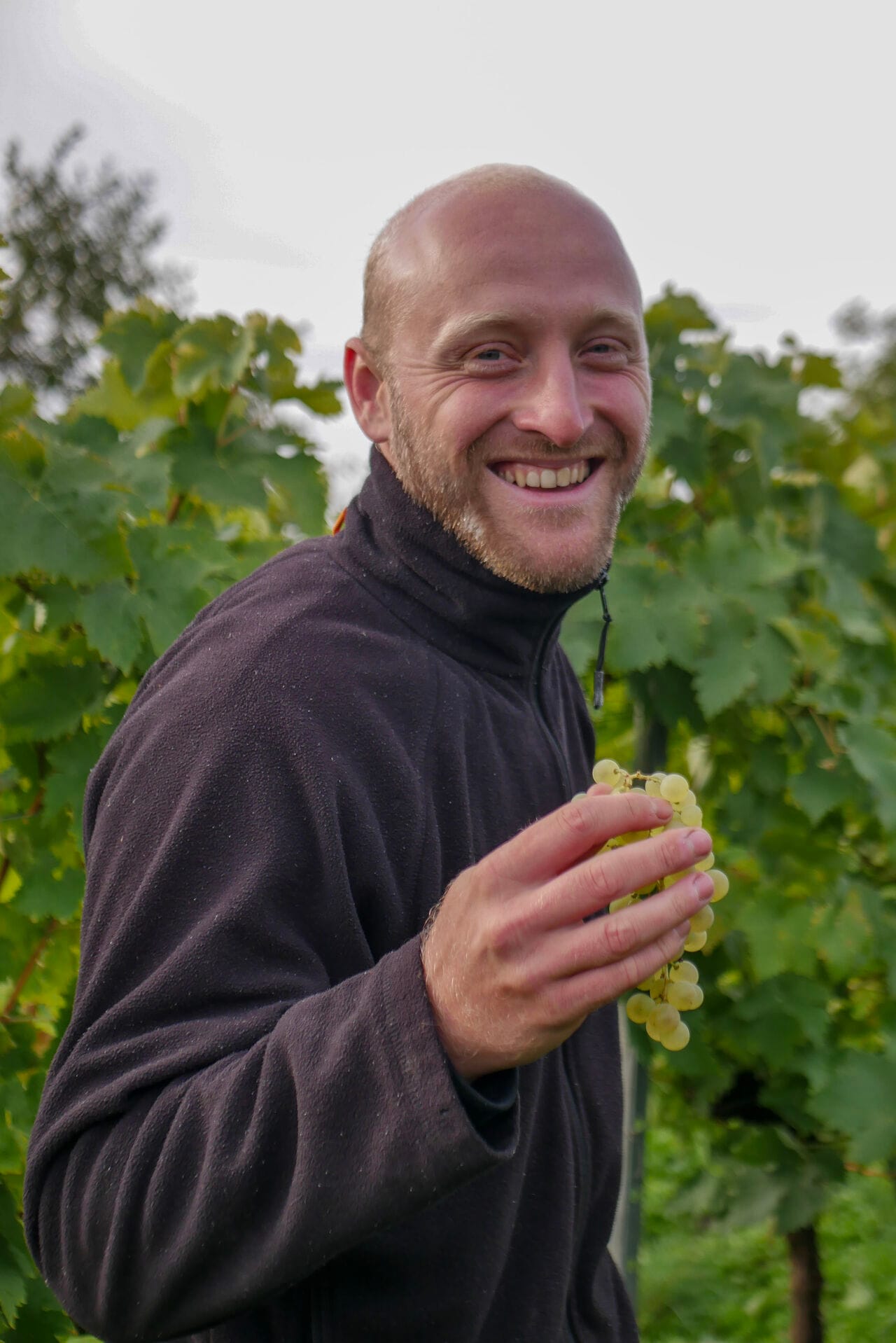
The leaves get the same level of attention. There need to be enough to ensure photosynthesis and sugar production, but not too many, so that the vine's energy goes into the fruit. The shoots are carefully managed to keep the vine from exhausting itself, with high trellising (a manual or mechanical operation that ties vine shoots to a support system) allowing the foliage to spread more evenly and the leaves to breathe. This approach promotes air circulation and reduces the risk of disease.
Hedging also plays a key role in managing shade: it's left thicker during heat waves to keep the grapes from scorching, and trimmed thinner when humidity is high to prevent moisture from lingering. This constant adaptation to weather conditions is the reality of the winemaker's craft, where every year is different and calls for ongoing adjustments to maintain quality.
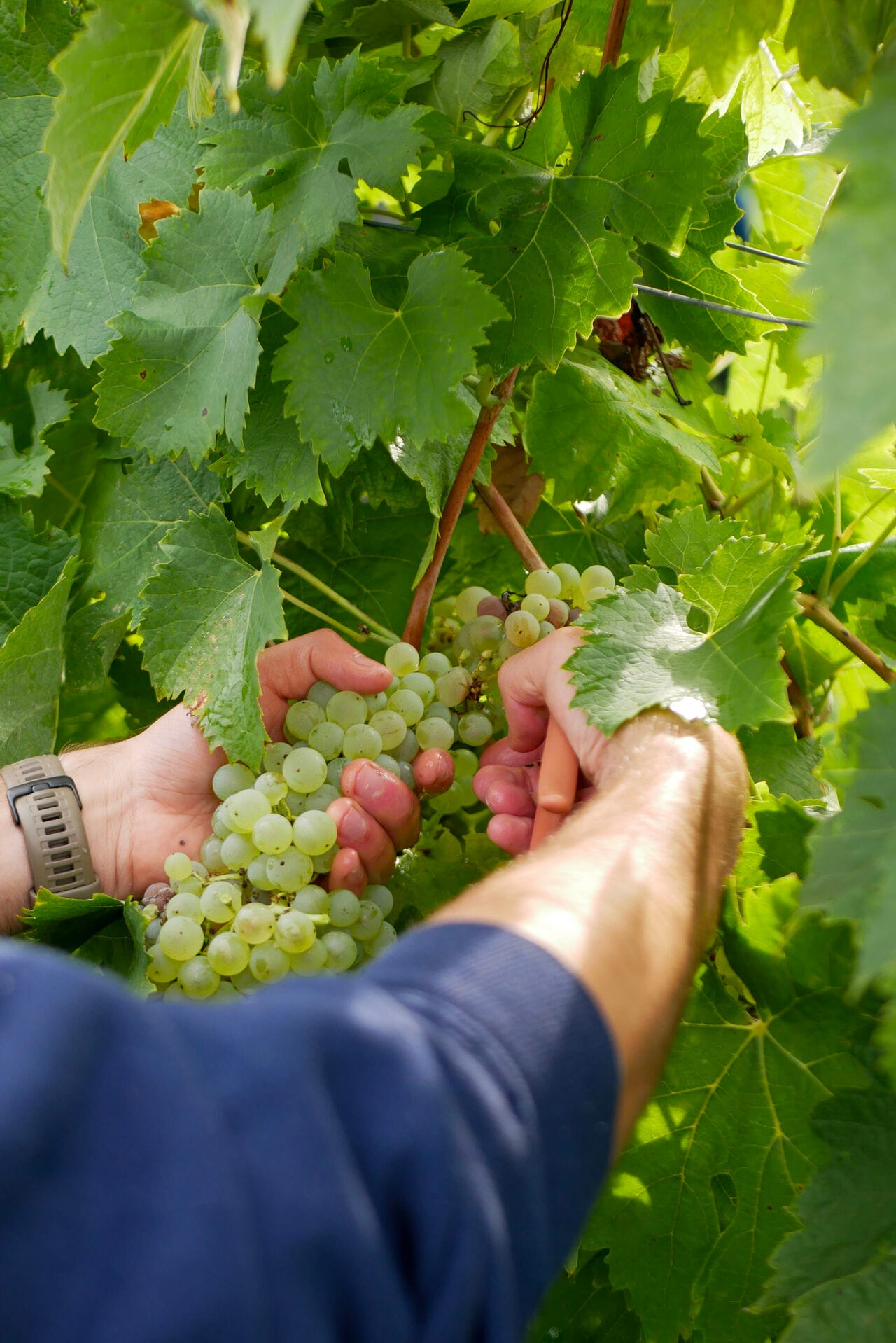
"Every action, from pruning to tying to hedging, is designed to optimize sap flow and aromatic concentration" - Corentin Negre, Vineyard Manager.
To encourage balanced growth and optimal grape ripening, we also treat the vines with natural stimulants (seaweed, nettle, and other plants). These organic preparations provide the vine with the trace elements it needs for the given conditions and can also bolster its natural defenses against disease.
Weed control requires just as much precision, keeping competing plants from sapping the vine's resources. At Maison Ferrand, we handle it primarily through mechanical methods, with no chemical herbicides, helping preserve the soil's balance and the vine's vitality.
Finally, lignification, when the green wood matures into hardwood, is encouraged by one or two copper spray applications. The vine then stops growing, and the sugar it produces is concentrated in the grapes or stored as reserves. An added benefit: the leaves are protected from downy mildew.
Monitor and taste
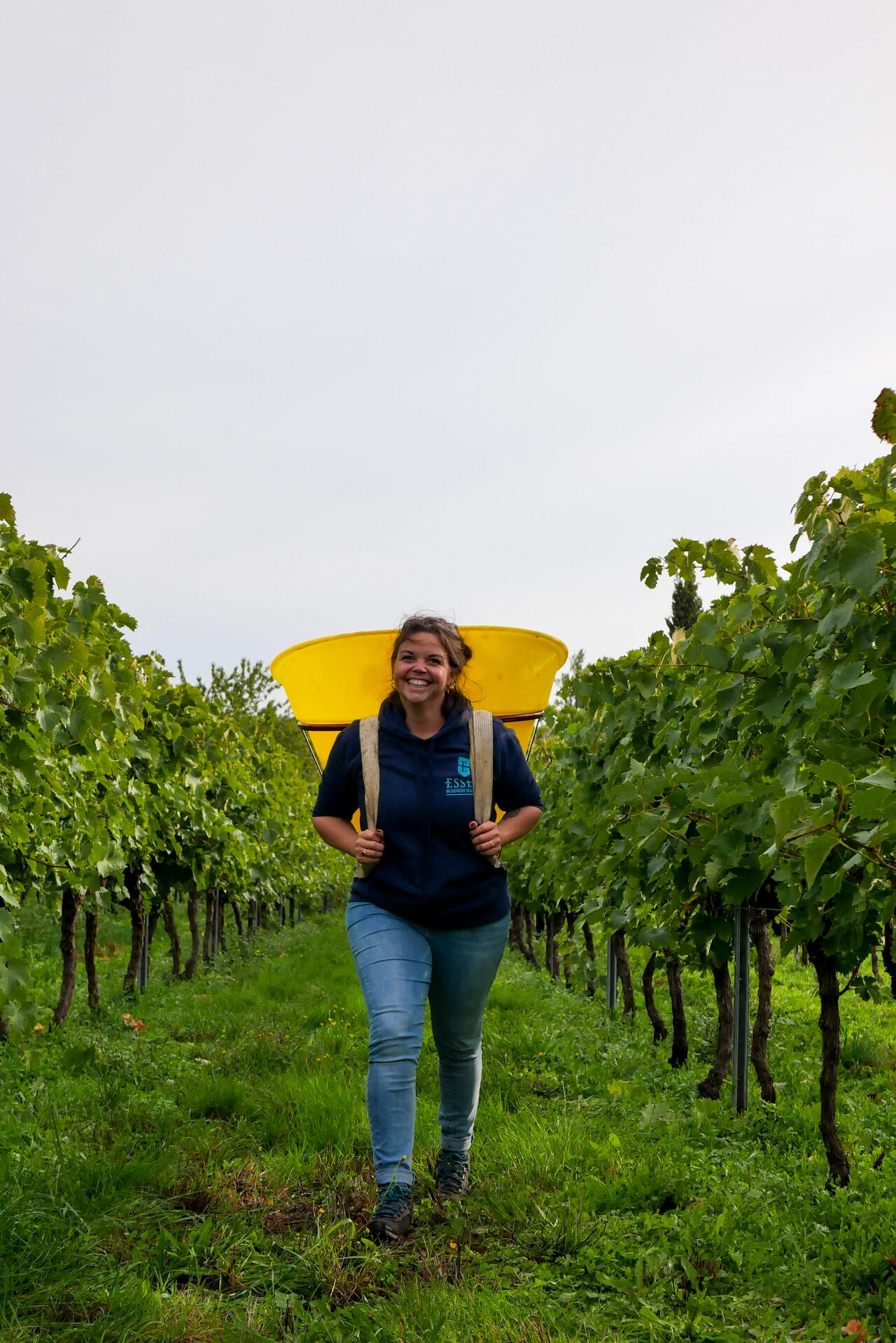
Starting at veraison (a key stage in the vine's cycle when the grapes change appearance and gradually take on color) in August, we begin ripeness checks to pinpoint the ideal harvest window. We hand-pick random samples of about 200 berries per plot, which Fannie and Lucie from our Research and Creation team then analyze. They measure sugar content (to estimate potential ABV), acidity, and pH, targeting a pH below 3 and sugar levels above 6 g/L. This balance ensures stable fermentations and the expression of the aromas we're looking for.
Corentin and his team prioritize physiological ripeness over a simple alcohol reading: "We harvest at around 10.5 to 11% potential alcohol, to keep the acidity while developing ripe fruit aromas."
These analyses are always backed up by a hands-on check of physical ripeness: observing how easily the berries detach, tasting to gauge the sugar-acid balance, and checking seed maturity. This dual assessment, chemical and sensory, lets us harvest the grapes at the perfect point of balance.
Once the grapes have reached that point of balance, a new chapter begins. We'll pick things up in an upcoming Uncut Story to explore fermentation, and then distillation.


Member discussion