


👉 Available on Spotify, Apple Podcast, Deezer, and more.
At Citadelle, this approach grows out of a vision Alexandre Gabriel has held from the very beginning: gin conceived as a true act of gastronomy. Every step serves one constant goal: getting the taste exactly right. That includes how we select our botanicals, where they come from, how much of each we use, and how gradually we infuse them. It's much like the way a chef works: creativity, deep knowledge of ingredients, precise technique, and the search for perfect balance.
Citrus, spices, flowers, herbs, and berries make up a real aromatic pantry. They can create a pairing, wake up a sauce, build on a seasoning, or even find a second life in chocolate. So what if gin has far more to offer at the table than we think?
Before we get to the most unexpected pairings, let's go back to one of gin's founding botanicals: juniper.
Around Cognac, as across southwestern France, juniper berries have long been part of everyday country cooking. Sometimes called "poor man's pepper," juniper once seasoned slow-cooked dishes, rabbit terrines, game stews, and some preserved foods. A few crushed berries were enough to lift a piece of meat or bring a resinous, woody note to a family recipe.
That culinary heritage gives us a new way to look at Citadelle Original. Its bold, aromatic juniper gives our gin its backbone and invites us to revive those traditions. Picture it with a pâté en croûte (a terrine baked in pastry), duck breast, smoked fish, or cured fish like gravlax. In gravlax, juniper joins salt, sugar and herbs to gently perfume the fish.
Bringing gin to the table means looking at what it can add to a dish, then building an experience around botanicals, textures, and sensations.
Seek an echo, or spark a contrast
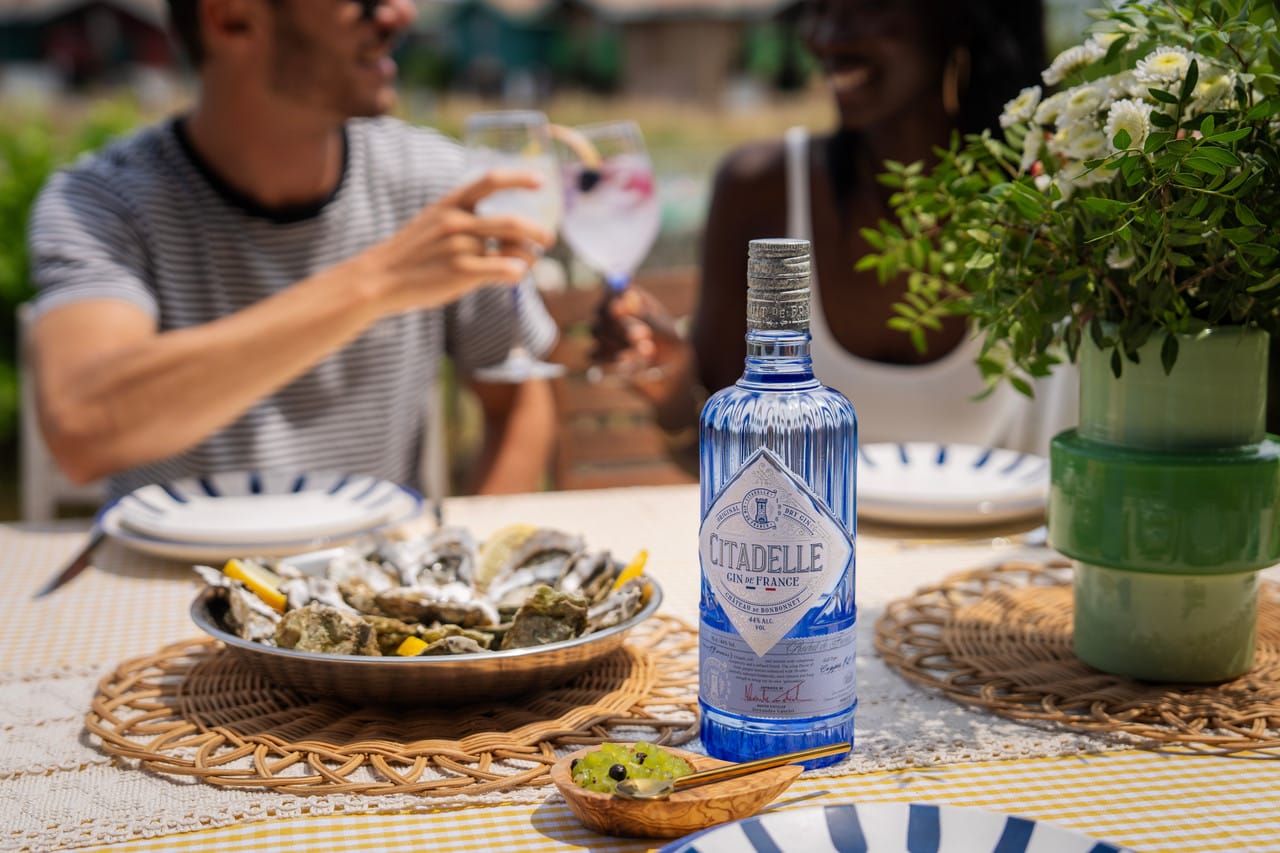
With seafood, it's often all about freshness. Oysters or raw fish easily find common ground with Citadelle Original. The pairing carries that freshness further, with the sea's briny tang, citrus, green notes, and juniper's resinous signature all talking to one another.
The table loves contrast, too.
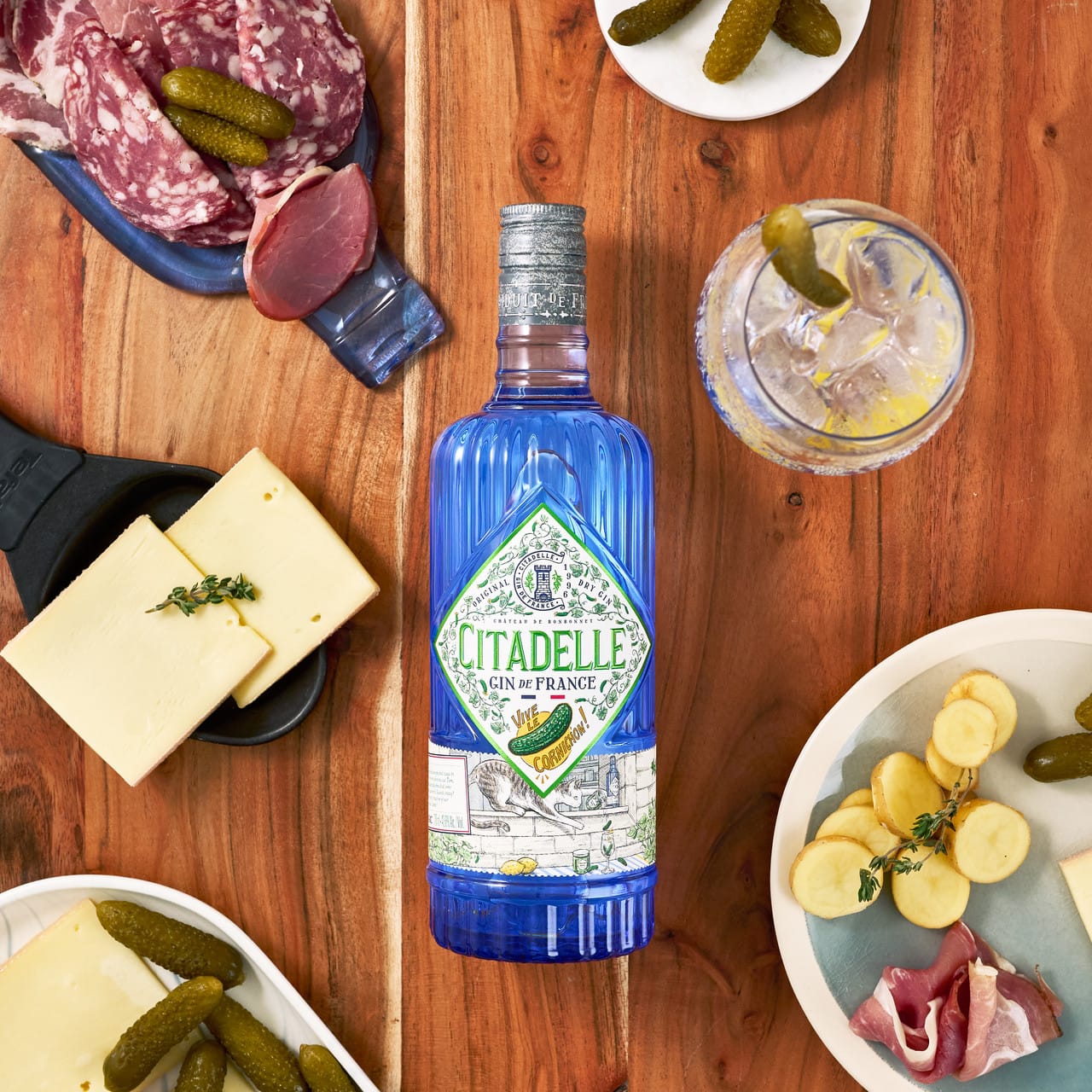
Take raclette. The melted cheese coats your palate, and the potatoes soften everything even more. Then comes the cornichon: tart, crunchy, almost sharp. That's exactly where Citadelle Vive le Cornichon! fits in. Its green, tangy profile draws on a familiar food pairing and simply moves it into the glass. It balances the richness of the cheese and refreshes the palate.
Some cocktails already work on the same principle. In a Negroni, bitterness creates tension against the drink's roundness. In a Martini, the olive adds a salty touch that changes how we taste the gin. Thinking about gin at the table simply extends habits we already have at the bar, often without even noticing.
A different latitude, a different plate
Thousands of miles from Bonbonnet, the mood shifts.
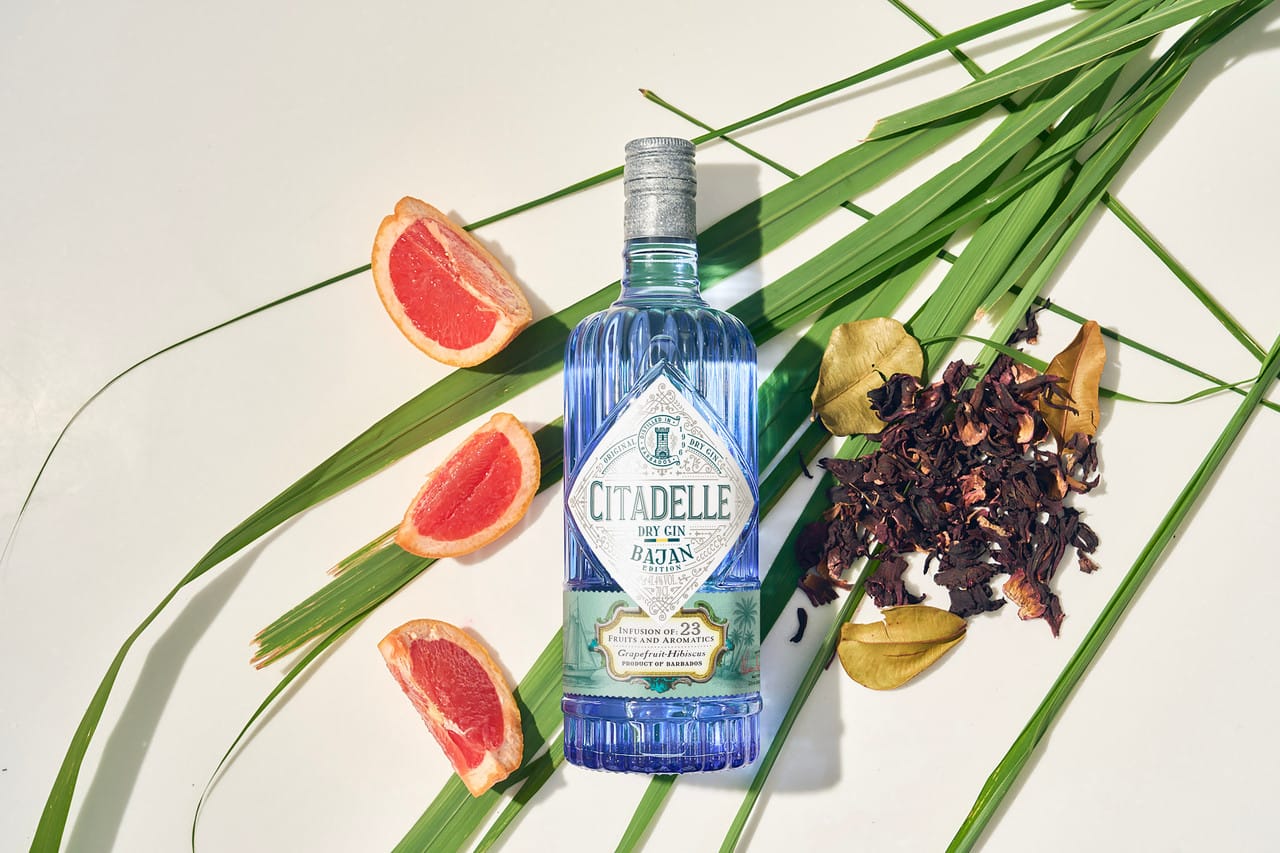
We distill Citadelle Bajan by the sea in Barbados. The recipe puts grapefruit front and center, a fruit tied to the island's history since the 18th century, alongside hibiscus and, as always, juniper.
On the palate, grapefruit brings both acidity and a gentle bitterness. To stay true to our gin's Barbadian roots, build the pairing around one of the island's signature fish. Think flying fish, mahi-mahi (known locally as dolphin fish, though it's unrelated to dolphins) or kingfish seared on the grill. Serve it with a citrus marinade, fresh herbs, and a few fire-roasted vegetables or fruits.
Here, the pairing is built on shared aromas, but it also tells the story of a place: the seashore, citrus, cooking over fire and a lively, generous island cuisine. The gin adds an extra edge and carries the island's character onto the plate.
A second life for botanicals
Gin botanicals have their place in the kitchen, too.
This culinary approach recently came to life at our Citadelle Gin distillery at Château de Bonbonnet, during the filming of the French TV show Le Goût des rencontres. The crew came to Bonbonnet with Sylvain, from the restaurant Poulpette in Cognac, to tour the distillery, taste our gins, and dream up a creation around Citadelle Original.
Sylvain came up with a dessert built like a cocktail: juniper berry ice cream, dill cream, lemon cream, and a Citadelle Original gin gelée. Served well chilled, the dessert captures the sensations of a cocktail and brings them onto the plate.
Juniper is the common thread. At the heart of Citadelle Original, it also features directly in the ice cream, while the dill carries its green freshness further. The lemon cream brings acidity, and the gin gelée delivers the spirit's aromatic signature in a different texture.
The result is a complete experience, built in the glass, in the kitchen, and right where we make the gin. The dessert offers a fresh, light take on Citadelle Original.
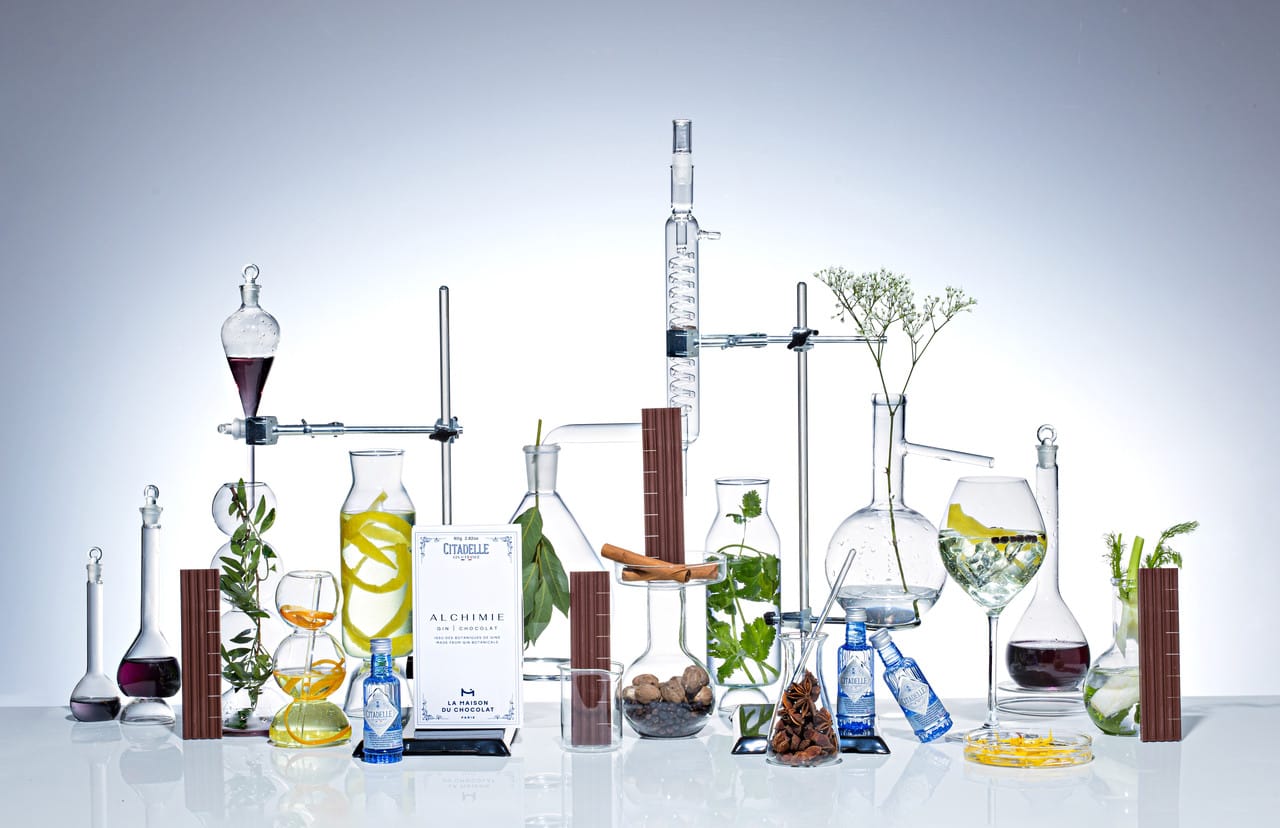
A collaboration with La Maison du Chocolat showed this in a striking way: the botanicals we use to make Citadelle found a second life in a chocolate bar. Once their work in the gin was done, they went into the chocolate, where their citrus, spice, and floral notes could reveal another side.
In the end, bringing gin to the table means learning to notice the details: acidity that wakes up a dish, a green note that echoes another, bitterness that balances richness, or a spice that revives a familiar recipe.
At Citadelle, this experience is a natural extension of the work we begin in the distillery. We choose, prepare, and blend every botanical so it finds its rightful place. At the table, the work simply continues: gin meets an ingredient, a cooking technique, a place, or a chef's sensibility.


Member discussion